🗣️ One Parent One Language (OPOL): When It Works and When It Fails


TLDR
- One Parent One Language (OPOL) assigns one consistent language to each parent.
- It works best when both languages have real-life use and emotional relevance.
- Inconsistent use and lack of community support are common reasons OPOL fails.
- Mixing languages early is normal and not a sign of confusion.
- Literacy requires separate, intentional support beyond spoken fluency.
If you’re raising kids abroad, you’ve probably heard of the one parent one language strategy. It sounds clean, organized, and almost engineered: Dad speaks one language, Mom speaks another, and the child grows up bilingual. Done.
In practice, it’s rarely that tidy. Sometimes the OPOL method success stories are beautiful and feel effortless. Other times, it becomes a daily negotiation that quietly falls apart. The difference isn’t willpower; it’s structure, exposure, and how language fits into real life.
Let’s unpack where this system shines, and where it tends to struggle.
🧭 1. What OPOL Actually Is
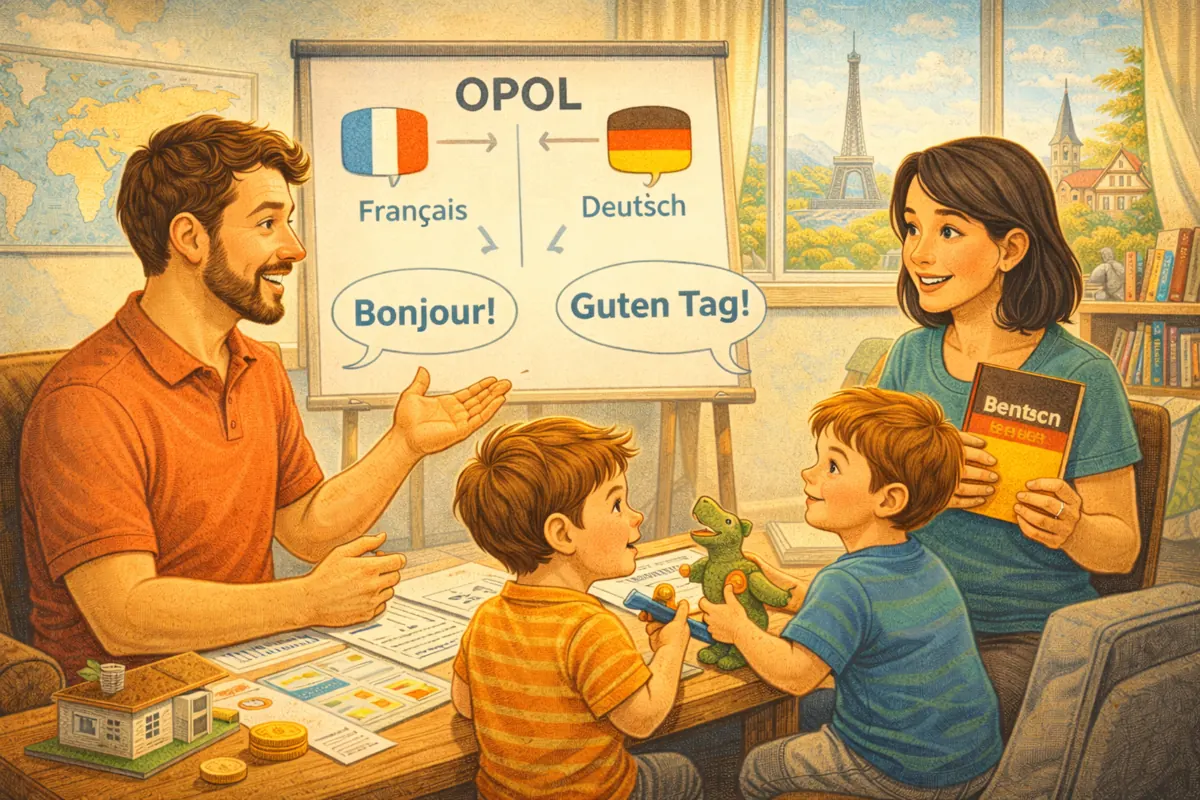
OPOL is a family language strategy in which each parent consistently uses a specific language when speaking to the child. The goal is clarity. Children associate one language with one caregiver, allowing the brain to build separate systems linked to predictable social cues.
Research in bilingual development consistently shows that children can successfully acquire two languages from birth when exposed to both regularly. There is no evidence that early dual exposure causes confusion.
The mechanics on bilingual acquisition studies are interesting. Essentially, the one parent one language approach is one way, not the only way, to create consistent exposure.
💡 Expert Tip: Don’t treat OPOL as a legal contract. While consistency is key, the “100% rule” can cause stress. Aim for “High Consistency” (80-90%) to keep the environment natural.
✅ 2. Why OPOL Often Works
The biggest strength of this system is structure. Young children learn through patterns. When one parent always uses Spanish and the other always uses English, the child doesn’t need to guess which language applies. This reduces cognitive load and helps them map language to the relationship.
OPOL pros and cons often center on the protection of minority languages. In expat families, one language often dominates socially, usually the community language.
Without a clear home structure, the weaker language can fade. When one parent consistently maintains that language, it stays alive. This is a foundational part of how expat families build long-term stability.
🔄 3. Early Mixing Is Not Failure
Parents often panic when children mix languages within a sentence. Linguists refer to this as code-mixing. It reflects vocabulary distribution, not confusion. Children pull from whichever system retrieves the word faster. As vocabulary expands, mixing usually decreases naturally.
Continued exposure is the cure, not aggressive correction. If you follow these OPOL bilingual tips, you’ll find that comprehension remains strong even if production fluctuates.
Correcting too harshly can lead to common mistakes expat parents make, often discouraging the child from speaking the minority language altogether.
⏳ 4. The Role of Exposure Volume
Here’s where the OPOL method failure can quietly begin. If one parent spends significantly less time with the child, that language may receive far less input. Research suggests that the amount of exposure strongly predicts vocabulary development.
| Exposure Scenario | Likely Outcome | Strategy |
| High Input (Full-time parent) | Active Fluency | Maintain natural conversation and reading. |
| Medium Input (Working parent) | Receptive Bilingualism | Supplement with media and weekend “deep dives.” |
| Low Input (Frequent travel) | Language Attrition | Use online tutors to bridge the gap. |
If an expat father speaks French but only sees the child an hour a day, while the other parent speaks the community language full-time, the community language will dominate. OPOL method success does not override exposure imbalance.
In these cases, you need daily routines that work for expat families to boost input.
🏫 5. When the Community Language Overpowers the System
Around preschool or early elementary years, the community language often becomes the “language of play.” Even with a strict one parent one language setup, children may begin responding in the stronger language. This doesn’t mean the strategy failed; it means social motivation changed.
If the minority language has no function outside the home, children may deprioritize it. To counter this, you must create a bilingual home environment where the language has a purpose beyond just one parent.
❤️ 6. Emotional Connection and Adolescence
Language tied to emotional experiences sticks. If a language is only used for discipline or homework, a child may associate it with stress. Successful families use each language for warmth, humor, and storytelling. Children retain languages connected to belonging.
As kids get older, they may temporarily distance themselves from one language to fit in with peers. However, the early foundations of one parent one language create durable neural systems. If exposure continues, reactivation later in life is usually rapid. Understanding long-term identity development for third culture kids can help parents navigate these tricky teenage years.
📖 Read More: If you are feeling the pressure of being the sole source of a language, learn about preventing burnout while raising kids abroad.
📚 7. Literacy: The Hidden Gap
OPOL focuses on spoken interaction, but reading and writing are separate skills. Without deliberate exposure to print, the minority language often remains conversational only. Parents must be intentional about choosing a homeschool curriculum or finding supplemental resources to bridge the academic gap.
Literacy Checklist:
- Daily reading sessions in the minority language.
- Access to free vs. paid homeschool resources.
- Writing letters or emails to relatives abroad.
- Labeling household items during the early learning phase.
⚠️ 8. When OPOL Fails
When OPOL fails, it rarely looks dramatic. It looks gradual. Sometimes parents abandon OPOL during stressful periods and never fully return to consistency. Sometimes one parent reverts to the dominant language because it feels easier. Children adapt quickly to the easiest available system.
Common Causes for Strategy Erosion:
- Inconsistent language use or frequent “bridge-switching.”
- Minimal exposure from one parent due to work or travel.
- Lack of community reinforcement (no one else speaks the language).
- High pressure or forced responses leading to culture shock at home.
Overcoming OPOL challenges requires sustained commitment more than enthusiasm. If you find yourself slipping, it may be time to adjust your language strategy.
🛠️ 9. Practical Guidelines for Success
If you want to ensure your one parent one language examples lead to success, keep these points in mind:
- Stay Consistent: Aim for 90% consistency in your assigned language.
- Keep it Warm: Use the language for humor and connection.
- Read Regularly: Use online language learning tools to supplement books.
- Create Real Reasons: Travel or call relatives who only speak the minority language.
- Don’t Panic: Mixing is a sign of a busy, developing brain.
🏁 Conclusion
One parent one language is a structure, not a guarantee. It works when both languages receive meaningful exposure and when the environment supports the life of the language. If it fits your rhythm, it can build incredible competence over years. And if it needs adjusting, that’s not failure—it’s strategy.
Whether you are managing work and parenting or raising children abroad and facing real challenges, remember that children learn languages to participate. If the language gives them access to stories and relationships, they will keep it. Multilingual families aren’t built in a month; they’re built in thousands of ordinary conversations.