🌍Raising Children Abroad: The Real Challenges


TLDR:
- Raising children abroad is a developmental journey that displaces a child’s sense of stability, requiring intentional support from parents.
- Language acquisition is often an emotional struggle for families, rather than just a technical or academic one.
- Children growing up outside their home country often develop complex “Third Culture” identities that lack a single cultural anchor.
- Maintaining stable relationships and education while moving requires proactive planning and a willingness to adapt traditional models.
- Long-term success for expat families is built on open communication, consistent routines, and a focus on internal family stability.
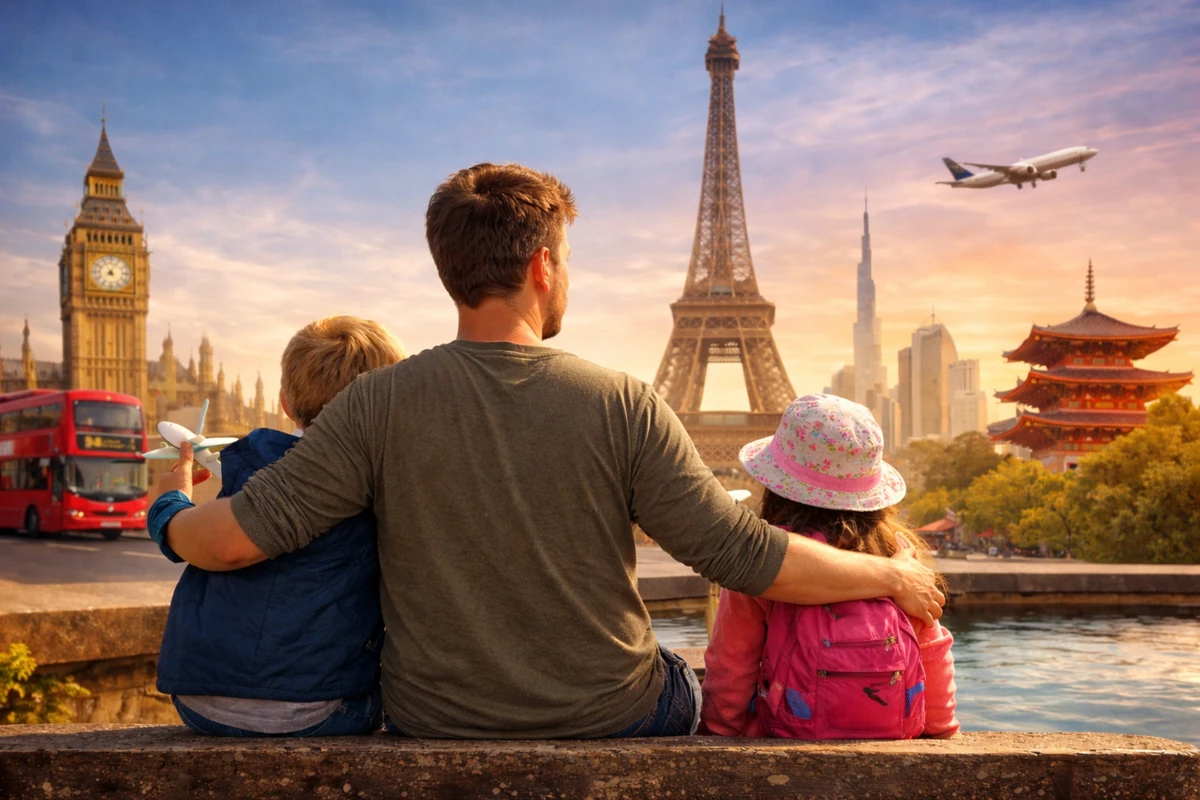
Raising children abroad is often described as a grand adventure. In many ways, it is exactly that. Your family gets to experience new cultures, hear new languages, and see the world through a much broader lens. These experiences are deeply enriching and can change the trajectory of a child’s life for the better.
However, when you strip away the polished social media images, there is a different layer that deserves honest attention. The day to day challenges of international life shape your kids, your marriage, and your role as a parent in ways you might not anticipate.
This is especially true for the expat father who is trying to lead a family through these transitions.
Core Philosophy: Success abroad isn’t about the number of stamps in a passport; it’s about the strength of the foundation you build inside your own home.
🏠 Leaving Familiar Ground Behind
The first challenge usually hits before the boxes are even unpacked. Moving to a new country disrupts every pillar of a child’s stability at the same time. Their home, their school, their friends, and even the food they eat all change in a single afternoon.
Adults usually frame the move as a choice with a positive upside. Children, however, often experience it as a loss before they ever see it as a gain. Younger kids may not have the words to explain this, but it surfaces through sleep issues or emotional outbursts. Older kids may grieve their lost friendships and routines more explicitly.
Helping them adjust is a major part of how expat families build long-term stability in a new environment.
The Three Stages of Expat Child Transition:
- The Arrival: High adrenaline and novelty. Everything feels like a vacation.
- The Dip: The novelty wears off. The reality of being “different” or “new” sets in.
- The Integration: Local routines become the new normal and a sense of belonging begins to form.
🗣️ Language Is an Emotional Battleground
Language is one of the most obvious differences in an international upbringing. Its impact goes far beyond just learning new words. It affects a child’s identity, their confidence, and how they relate to their peers.
Kids immersed in a new language often understand more than they can say. This can make them seem shy or withdrawn when they are actually just processing. For families raising bilingual or multilingual children, there’s also the long game to consider. Heritage languages tend to weaken without deliberate reinforcement.
This is why creating a bilingual home environment abroad is so important. Learning how kids naturally acquire multiple languages abroad can help you lower the tension and avoid turning language into a power struggle.
🗺️ The Complexity of Third Culture Identity
Children who grow up outside their parents’ passport country often develop what is known as a “Third Culture Kids” identity. They may feel at home in multiple places but fully rooted in none.
This is a powerful strength that makes kids adaptable and culturally aware. However, it can create confusion during adolescence. You might hear your child ask why they feel different or where they are really from.
As a parent, it can be uncomfortable to realize your child’s sense of home does not match yours. You might still feel anchored to your home country while they feel like a foreigner there. This gap is a natural part of long-term identity development for third culture kids.
🎓 The Education Puzzle
Schooling is one of the most complex decisions for families abroad. It sits at the intersection of your values, your budget, and your long term plans.
| Schooling Path | Key Advantage | Potential Drawback |
| Local Schools | Deep cultural and language immersion | High pressure; cultural friction |
| International | Curricular continuity; global community | High cost; “expat bubble” isolation |
| Homeschooling | Ultimate flexibility; family bonding | High parental time investment |
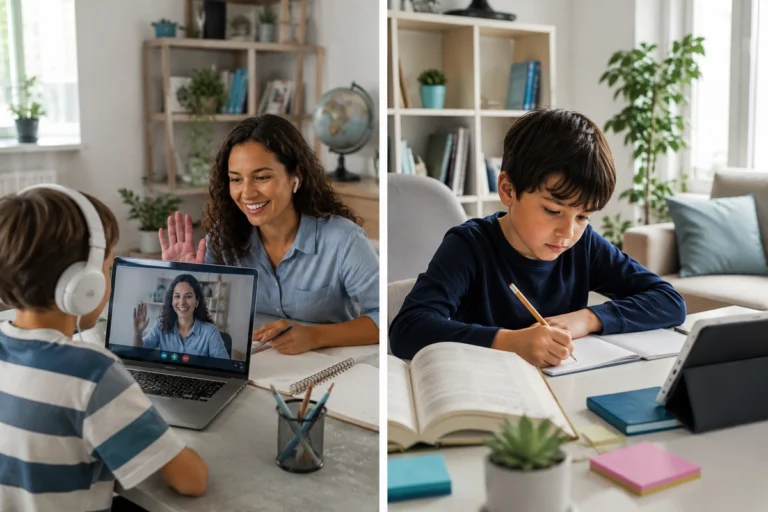
Many parents are now looking at alternative models. Some find that is homeschooling legal when living abroad long term is the first question they need to answer.
Many dads are successfully choosing a homeschool curriculum while living overseas to keep their kids on a consistent track. The challenge is finding the one that aligns with your family priorities right now.
⚖️ Parenting Under a Cultural Microscope
Raising kids abroad means parenting in public. Your choices regarding discipline, independence, and family roles will often stand out to the locals. In some cultures, kids are given a lot of autonomy at a young age. In others, adult authority is emphasized more strictly.
Expectations around fatherhood and work-life balance vary significantly across cultures. The challenge here is internal.
You are constantly calibrating between adapting to your environment and staying true to your family’s values. This tension is a major factor in preventing burnout while raising kids abroad.
💰 Managing the Practical Stress
Beyond the emotional challenges, there is the sheer logistical weight of being an expat family. You are managing a lifestyle that spans multiple jurisdictions.
This includes everything from how expat families manage money across multiple countries to finding reliable healthcare. You don’t have the “village” of extended family to help out.
Establishing daily routines that work for expat families is the only way to keep the chaos at bay. Without these systems, the constant novelty of expat life can quickly turn into exhaustion.
🛡️ Building Emotional Resilience
There is a common myth that kids automatically become resilient just by being exposed to There is a common myth that kids automatically become resilient just by being exposed to different cultures. In reality, resilience is built through supported challenges.
Quick Check: Supporting Your Child’s Resilience
- Are we maintaining at least one “hometown” tradition or meal weekly?
- Have we given our kids “veto power” or input on a small family decision lately?
- Do our kids have a private way to communicate with old friends?
You can also look for signs your child is thriving abroad to help you balance your perspective. If they are making new friends and showing curiosity about their environment, the challenges are likely being managed well.
🌅 The Long View of International Parenting
Raising children abroad is about building a stable family life in an environment that is often unstable by default. There will be moments when you question if the trade offs are worth it. That doubt is normal.
What matters most in the long run is not the number of languages your kids speak. It is whether they felt understood and secure during the journey. If you are intentional about your choices, you give your children the ability to build a sense of home anywhere in the world.
Remember that managing work parenting and travel as an expat dad is a skill that takes time to master. Stay present through the transitions, keep the communication open, and focus on the stability you create inside your own four walls.
Recommended Reading: