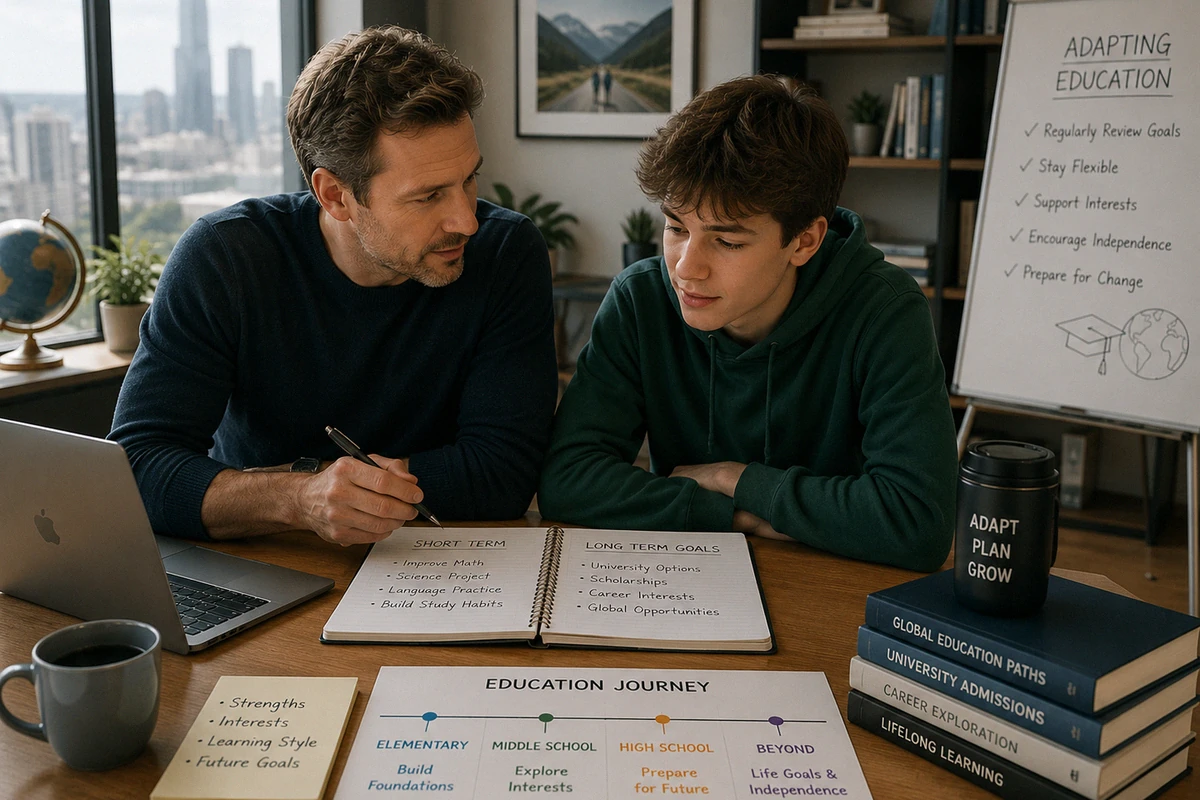
🚀 Adapting Education as Your Child Grows Older


TLDR
- Educational needs change significantly as children grow, requiring adjustments in structure, expectations, and learning methods.
- Younger children benefit from play-based and flexible learning, while older kids need more structure and accountability.
- Independence, critical thinking, and long-term planning become more important during the teenage years.
- Curriculum, tools, and routines should evolve regularly rather than staying fixed for years.
- The most effective expat families review and adapt their approach continuously instead of relying on one system long-term.
One of the biggest misconceptions about alternative education is that once you find a system that works, you are completely set for life. In reality, that system always has an expiration date built right into it.
What works beautifully for a six-year-old often falls completely apart by the time that same child turns ten. By the teenage years, you are dealing with a completely different set of needs altogether.
For nomadic families, this reality becomes even more obvious. Your environment changes, your routines shift, and your child is developing at a pace that does not always line up with your original blueprint.
Adapting education over time is not optional. It is an essential part of the process when managing your lifestyle, which is exactly why managing work, parenting, and travel as an expat dad requires constant adjustments.
🧸 Early Years: Building Foundations Without Overcomplicating It
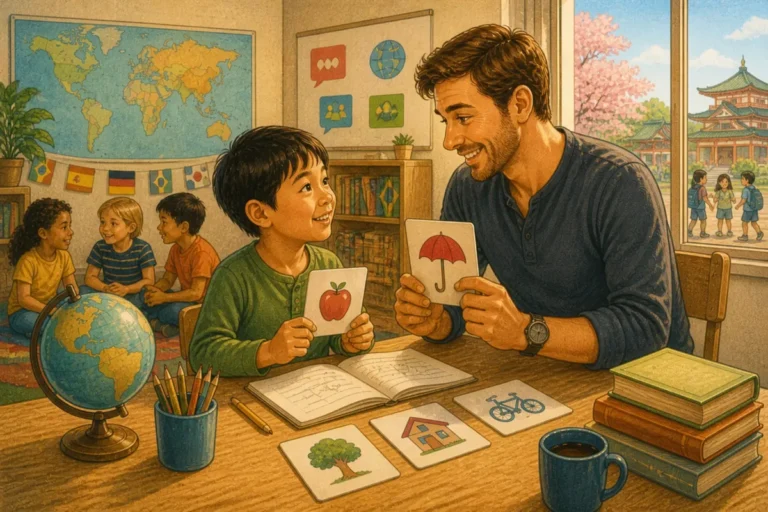
In the early years, simplicity usually wins every single time. Young children learn best through active exploration, physical repetition, and daily personal interaction.
Formal academic structure is far less important than developing core skills like language, basic numeracy, and social awareness. At this stage, attention spans are incredibly short and forcing long desk sessions rarely ends well.
Trying to impose rigid schedules or long lessons often backfires completely. Children may resist, lose focus, or simply disengage from the material entirely.
Instead, effective systems tend to focus on short learning blocks combined with play and real-world experiences. Living and thriving abroad actually makes implementing an age-appropriate learning strategy much easier than it would be back home.
Daily life naturally introduces new vocabulary, cultural observations, and problem-solving opportunities. These moments often teach more than a structured lesson ever could, letting you spot the visual signs your child is thriving abroad without rigid tests.
Expert Tip: Keep formal lessons under fifteen minutes for kids under six. Focus the rest of your day on conversational language acquisition and spatial awareness through physical exploration.
📐 Middle Years: Introducing Structure and Consistency
As children grow, their ability to focus and follow structured learning improves significantly. This is exactly where many families begin to introduce more formal, predictable routines into the household.
Subjects like math, reading, and writing benefit immensely from consistency. Regular daily practice helps build long-term fluency, deep confidence, and academic competence.
At the same time, flexibility still matters a lot. Children in this age group often respond incredibly well to a balanced daily schedule.
Too much rigidity can lead to early burnout, while too little structure can result in massive gaps in knowledge. Adapting education child age requirements means finding a sweet spot between textbooks and freedom.
Finding that perfect balance takes some trial and error for every single family. But once it clicks, learning becomes more predictable and significantly easier to manage when utilizing daily routines that work for expat families on a day-to-day basis.
| Learning Area | Ideal Approach for Middle Years | Time Commitment |
| Core Math | Structured curriculum with daily worksheets | 30 to 45 minutes daily |
| Language Arts | Independent reading and short creative essays | 45 minutes daily |
| Science & Culture | Hands-on experiments and local field trips | Flexible weekly blocks |
↗️ The Shift Toward Independence
Around the pre-teen years, something major starts to change in your household dynamic. Children become much more capable of managing their own daily learning schedules.
They can follow complex instructions, complete assignments independently, and begin taking genuine responsibility for their academic progress. This is a crucial transition point for alternative educators.
Parents who continue to micro-manage every single detail may unintentionally limit their child’s natural development. On the other hand, stepping back too quickly can leave children feeling unsupported and overwhelmed.
The primary goal during this phase is encouraging gradual, steady independence. You are adjusting curriculum as kids age to give them more ownership over their assignments.
You are still heavily involved, but you are no longer directing every single step of the day. Instead, you are guiding, checking in, and providing support when specific challenges pop up.
This critical shift lays the essential groundwork for the upcoming teenage years. It requires careful planning, much like figuring out how to build a location-independent income stream before changing your lifestyle.
- Step 1: Let the child pick the order of their daily subjects.
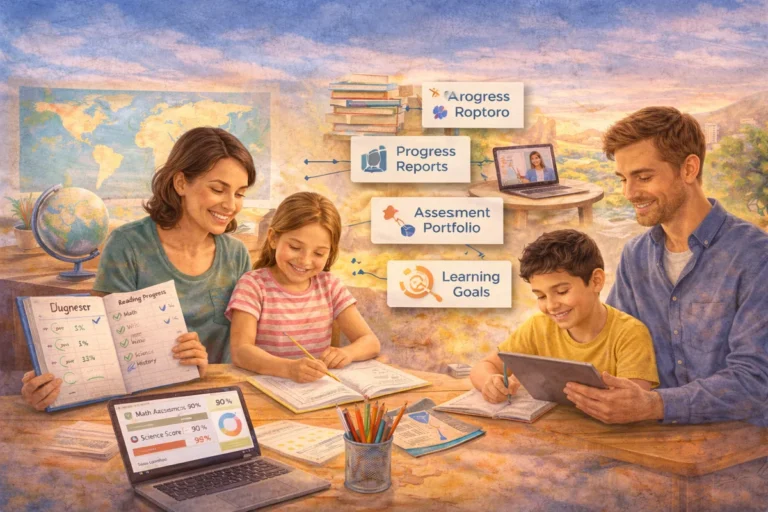
- Step 2: Shift from daily grading to weekly progress reviews.
- Step 3: Assign long-term projects that require multi-day planning.
🌍 Teenage Years: Preparing for the Real World
By the time your child reaches their teenage years, education starts to look very different. Academic knowledge is still important, but it is no longer the sole focus of your days.
Skills like critical thinking, time management, and self-discipline become completely essential. Teenagers need to learn how to plan, prioritize, and take total ownership of their daily output.
This is also when long-term considerations and future goals come into play. Depending on your family’s goals, this might include preparing for university admission, vocational paths, or alternative career routes.
Implementing a successful homeschooling for teens strategy means looking ahead at global requirements. Different global systems have vastly different entry requirements, and you must check if homeschooling is legal when living abroad long-term in your current region.
Some families choose highly structured programs that align strictly with international standards. Others build completely customized paths based entirely on their child’s unique interests and strengths.
There isn’t a single correct approach to managing an evolving education plan for teens. But there does need to be a massive amount of intentionality behind your choices.
Read More: For a deeper look into the legal side of older years education, check out the official global guidelines on UNESCO’s education policy page for international schooling standards.
📚 Adjusting Curriculum Over Time
One mistake many alternative education families make is sticking with the exact same curriculum for too long. A program that works beautifully at one stage may become incredibly limiting later on.
As children grow, their specific learning needs become much more precise. They may develop strong interests in certain technical subjects or require additional targeted support in others.
Constantly adjusting curriculum as kids age allows you to respond dynamically to these changes. This ensures that education changes for growing children remain highly effective over the long haul.
This does not necessarily mean throwing everything out and starting completely from scratch. Often, it is simply about supplementing existing materials, adding new subjects, or changing the pace of the learning.
The key is staying highly responsive rather than remaining rigid out of pure habit. It is about building an evolving learning plan that adapts to their changing minds, making sure you are choosing a homeschool curriculum while living overseas that fits their exact level.
- Assess engagement: Are they finishing tasks too fast or completely stalling out?
- Supplement gaps: Bring in outside experts or specialized online platforms when topics get advanced.
- Rotate materials: Switch up formats if a textbook series starts causing daily arguments.
💻 Evolving Learning Tools and Methods
Technology plays a massive role in modern education, especially for families moving across borders. But just like your physical curriculum, your digital learning tools need to evolve over time.
Younger children often benefit from highly interactive, colorful, and visual platforms. These tools help maintain engagement and make abstract concepts feel incredibly approachable.
Older children, however, usually need much more academic depth from their software. They require tools that support serious research, advanced writing, and complex problem-solving rather than simple gamified exercises.
Shifting tools as your child grows helps maintain both high engagement and educational effectiveness. It is a core part of managing a successful evolving learning plan.
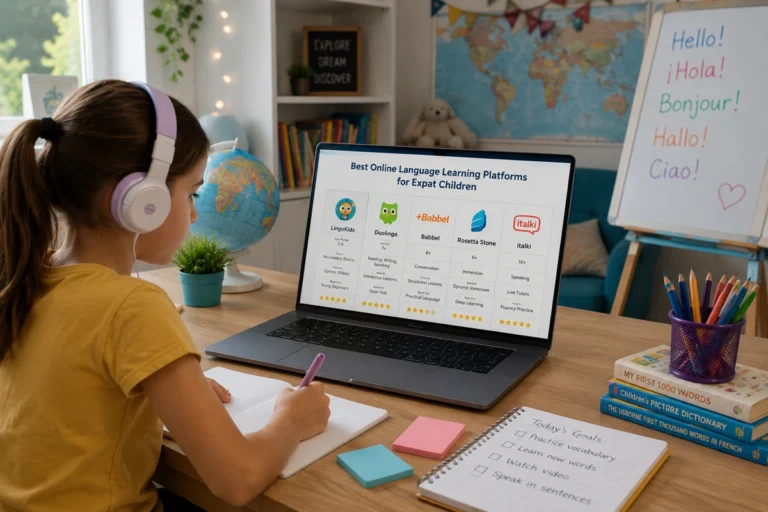
You can find excellent options by reviewing the best online language learning platforms for expat children. Selecting the right tools prevents tech from becoming a source of frustration.
| Age Group | Tool Type | Primary Function |
| Ages 4 to 8 | Gamified apps & tablets | Visual engagement and basic phonics |
| Ages 9 to 13 | Interactive video & docs | Research skills and collaborative writing |
| Ages 14+ | Specialized software & AI | Advanced coding, data analysis, and essays |
⏰ The Role of Routine
Routine is one of the most thoroughly underestimated factors in alternative education. For younger children, predictable routines provide a deep sense of psychological security.
They create a sense of safety, which makes tackling difficult new subjects feel manageable. As children grow older, these daily routines must shift from being externally enforced to internally managed.
Teenagers, in particular, benefit immensely from learning how to structure their own daily time. This self-regulation skill does not happen automatically.
It requires consistent practice, parental guidance, and occasional uncomfortable adjustments. But once established, it becomes a powerful life skill that extends far beyond academics.
Learning to build solid habits is just as vital as understanding how expat families balance travel and education. It forms the backbone of personal productivity.
Expert Tip: Transition your pre-teen from a strict hourly schedule to a checklist-based day. Let them decide when to take breaks, as long as the work is done by 5 PM.
🌱 Social and Emotional Development
Education is never just about academic textbooks and high test scores. As children grow older, their complex social and emotional needs become much more nuanced.
Living abroad adds another unique layer to this developmental puzzle. Children are regularly exposed to entirely different cultures, languages, and social environments.
Adapting education child age strategies means factoring these cultural shifts into your planning. Younger children may just need simple opportunities for physical play and casual interaction.
Older children, however, need deeper, more meaningful social connections and opportunities to build lasting relationships. They need to understand long-term identity development for third culture kids to feel fully grounded.
Ignoring this critical aspect of development can lead to a severe lifestyle imbalance. A truly well-rounded alternative approach always considers both academic milestones and personal emotional growth.
- Community sports: Join local leagues to build teamwork skills outside of language barriers.
- Shared hobbies: Encourage online or local clubs centered around specific teenage interests.
- Volunteer work: Engage in local community projects to build empathy and real-world perspective.
🚨 Knowing When to Make a Change
Recognizing exactly when to adapt your educational approach is just as important as knowing how to do it. There are a few clear signs that usually indicate it is time for a major change.
If your child seems consistently disengaged, if academic progress has stalled entirely, or if daily lessons feel either too easy or frustratingly difficult, something likely needs a swift adjustment.
These warning signals are not failures on your part. They are simply valuable data feedback.
Responding to these signals early prevents larger motivational issues down the line. It ensures you are providing relevant continuing education for older kids.
It is very similar to recognizing when to adjust language strategy for growing kids abroad before they push back. Dynamic changes keep the learning journey smooth.
Read More: To understand tracking milestones outside a traditional school framework, review the academic tracking methods outlined on the National Home Education Research Institute platform.
🎯 Keeping the Long-Term in Mind
While day-to-day learning matters, it is crucial to keep an eye on the bigger picture. You have to ask yourself what kind of specific skills you want your child to develop before they leave the nest.
Perhaps you want them speaking multiple languages fluently. Or maybe you want them to have the ability to earn money online, just like their expat dad.
You might prioritize familiarity with cutting-edge technology like AI, or real-life street smarts so they can travel the world without fear. As children grow, these targeted questions become much more relevant to your daily curriculum choices.
Education changes for growing children should always align with these long-term lifestyle goals. It is about preparing your child for the specific kind of independent life they will eventually lead.
That broad future perspective helps guide your small, daily decisions as your overall approach evolves. It gives meaning to the daily grind.
- Language fluency: Prioritize conversational immersion over grammar drills.
- Digital literacy: Teach actual creation tools rather than just passive media consumption.
- Financial savvy: Involve them in multi-currency family budgeting for expat families to teach real-world finance.
✍️ A Small Personal Observation
One thing that becomes crystal clear over time is that absolutely no educational system lasts forever. Families who head into this journey expecting a permanent solution often end up incredibly frustrated.
The parents who do best are the ones who treat education as something that evolves naturally over time. They are constantly tweaking their evolving learning plan to match reality.
They make small, quiet adjustments along the way. They pay close attention to what is working and completely discard what isn’t.
They are never afraid to pivot or change direction when a system stops serving their family. It is much less about finding a flawless plan and far more about staying incredibly flexible as a parent.
This flexibility helps you avoid common mistakes expat parents make with language and schooling. It keeps your family moving forward together.
Expert Tip: Review your educational setup every six months. Sit down with your child, look at the current routine, and openly ask what feels like a waste of time.
🏁 Conclusion
Education in an international environment is never a fixed system. It is a constantly moving target.
As your child grows, their needs, physical abilities, and personal interests will change completely. The environment around them may shift rapidly as well.
Families who recognize this reality early on tend to have a much smoother experience. They adjust daily routines, update digital tools, and rethink their overall approach whenever necessary.
They stay highly involved in the process without becoming rigid or dogmatic. Over time, this conscious flexibility creates a thriving learning environment that grows alongside the child.
In the long run, that deep core adaptability becomes one of the most valuable life lessons your child takes with them into adulthood.