🌍 How to Combine Online Learning With Real-World Education


TLDR
- Combining online learning with real-world education helps children build both academic knowledge and practical life skills.
- Online platforms provide structure and subject progression, while real-world experiences deepen understanding through observation and practice.
- Travel, local culture, and daily life abroad can become powerful educational tools for homeschooled children.
- Short, consistent online lessons often work best when followed by hands-on activities related to the same topic.
- Families living internationally can create highly flexible learning systems that blend digital education with real-world exploration.
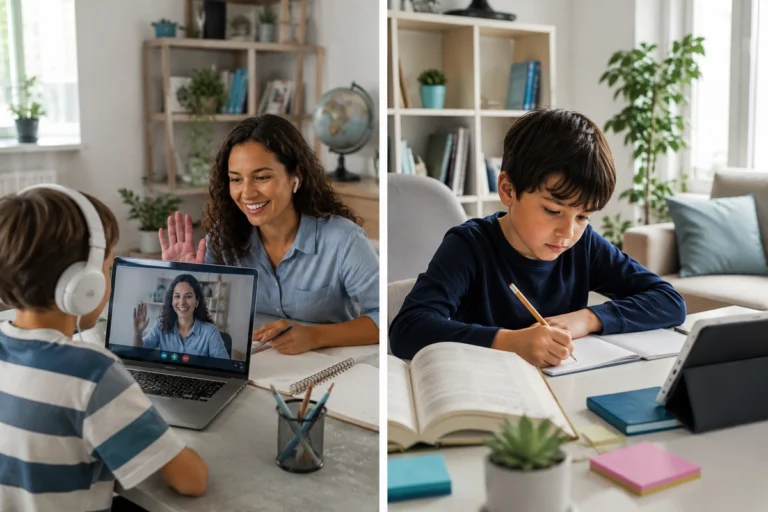
Online learning has become a central part of modern homeschooling for mobile families. For parents raising children in foreign countries, digital systems often form the entire backbone of a child’s academic education.
Math lessons, reading practice, science modules, and language instruction can all be delivered efficiently through digital platforms. But if you have spent time around global families, you have probably noticed something interesting.
The most successful home setups rarely rely on digital screens alone. Instead, many families combine structured online learning with real-world experiences that reinforce what children are studying.
When done well, this specific combination creates an education that feels both structured and alive. Especially for international families, the surrounding world can become one of the most powerful classrooms available.
💻 Why Online Learning Works So Well
Online education offers something that globally mobile families desperately need, which is consistency. When children log into the same learning platform every single day, their lessons continue regardless of location.
Whether the family is currently based in Colombia, Thailand, Portugal, or Vietnam, the underlying academic structure remains entirely stable. This predictability is particularly valuable in foundational subjects like mathematics, reading, and grammar, where concepts build progressively.
Digital programs often include structured lessons, quizzes, and automated progress tracking. These tools help children move step by step through a course without leaving massive gaps in understanding.
For parents who are trying to successfully manage a location independent income stream alongside travel, this clear structure makes daily learning far easier to organize. It takes the heavy administrative burden off your shoulders.
Read More
If you want to know how to select the right platform for this foundational layer, read our breakdown of the best online homeschool curricula for expat families available today.
🛑 The Limits of Screen-Based Education
At the same time, pure digital learning has its clear limitations. Children naturally learn many important life skills through direct physical experience and sensory engagement.
Handling physical objects, observing nature, interacting with people, and solving real-life problems all contribute to a deeper understanding. This balance between screen time and action is essential for a healthy lifestyle.
In fact, direct physical involvement with the environment is known to stimulate cognitive development and emotional resilience in unique ways. You can find more detail on these developmental dynamics in a comprehensive medical resource.
For example, learning about delicate ecosystems in a science lesson becomes far more memorable when children explore local forests, beaches, or national parks. Studying history takes on an entirely new meaning when children visit historical sites or architectural ruins.
Online learning provides the necessary academic framework, but real-world experiences give that knowledge context. Utilizing a model of blended learning for homeschooling ensures that your kids do not view education as a chore. Instead, they see it as a way to interpret the vibrant world around them.
Expert Tip
Do not try to replicate a strict school environment at home. Use a lightweight laptop or tablet that allows you to easily pack up and move your school setup to an outdoor park or local café when screen fatigue sets in.
🏙️ Turning Daily Life Into Learning Opportunities
One of the greatest advantages of raising children abroad is that everyday life naturally contains educational moments. You do not need to constantly invent artificial lessons because your environment does the heavy lifting for you.
Trips to local neighborhoods introduce new languages, diverse currencies, and distinct cultural customs. Relying on public transportation exposes children to geography, maps, and modern city planning.
Conversations with local shopkeepers build massive social confidence and adaptive language skills over time. These experiences might not look like traditional school lessons, but they contribute meaningfully to a child’s development.
When families consciously choose a path of hybrid education, the results can be surprisingly powerful. A basic math lesson about measurements might lead directly to baking a traditional meal together in the kitchen.
A geography module could inspire the family to step outside and explore prominent regional landmarks. Over time, children begin to see education as something directly connected to the community around them.
- Market Math: Have your child calculate total costs and count change using the local currency.
- Navigation Practice: Let your children plan a train route using a physical transit map.
- Culinary Chemistry: Use afternoon baking sessions to explain liquid measurements and chemical reactions.
This approach makes it incredibly simple to practice mixing online and offline learning without feeling like you are running out of hours in the day. It helps you maintain a smooth daily routine that works for expat families without creating unnecessary household stress.
🔗 Linking Lessons With Experiences
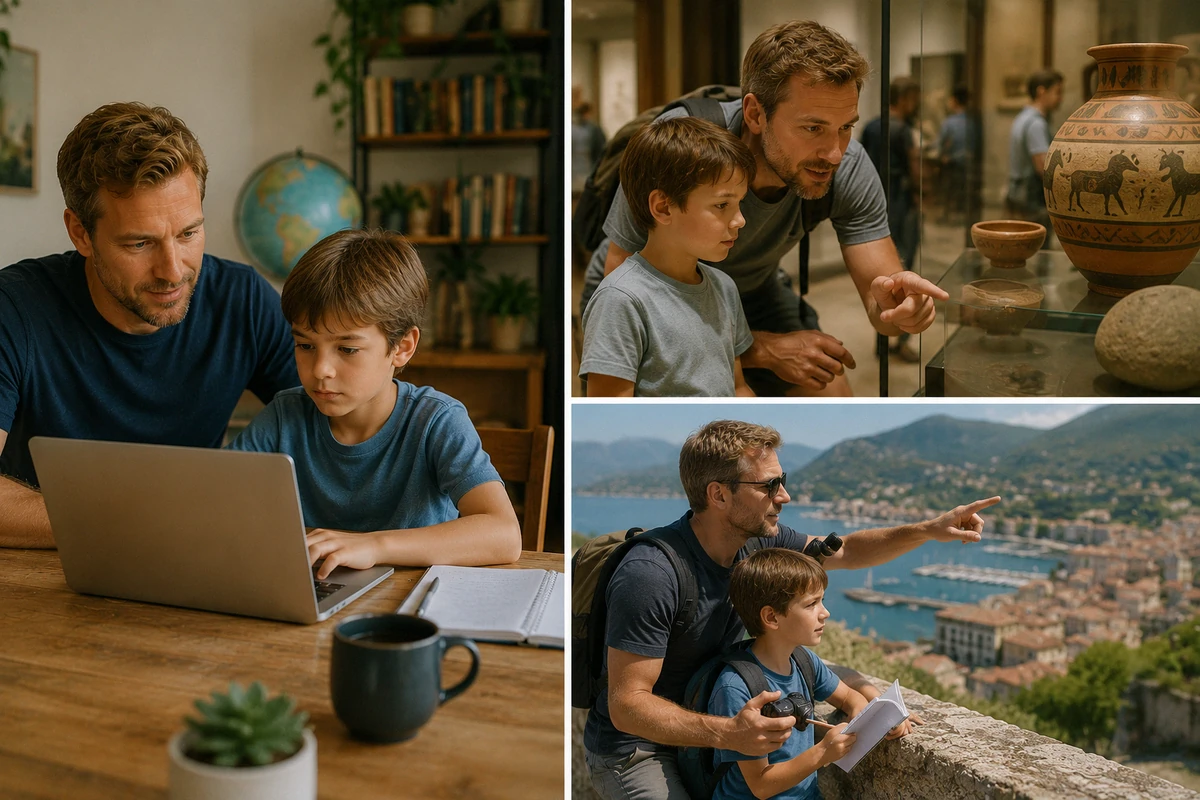
One practical way to combine digital learning with real-world education is by linking morning lessons to afternoon activities. This approach gives immediate purpose to abstract concepts.
For example, a child studying plant biology through an online course can spend the afternoon observing local vegetation in nearby botanical gardens. A history lesson about ancient maritime trade might lead to exploring historical port districts or local museums.
Even simple household activities can reinforce complex digital lessons. Building a small physical model, conducting a basic science experiment, or discussing current events at the dinner table can help children apply ideas easily.
The key is not turning every single family outing into a rigid, formal lecture. Instead, it is about creating small, natural bridges between academic content and everyday experiences.
Curriculum Matching Guide
| Morning Online Lesson | Afternoon Real-World Activity | Educational Outcome |
| Currency Conversion | Shopping for local produce | Financial literacy and mental math |
| Oceanography Unit | Visiting a tidal pool or beach | Marine biology observation |
| Foreign Language App | Ordering lunch at a café | Conversational confidence |
Integrating e-learning in daily life in this manner keeps your schedule completely dynamic. It provides an excellent framework for adapting education as your child grows older and develops more advanced interests.
✈️ The Role of Travel in Education
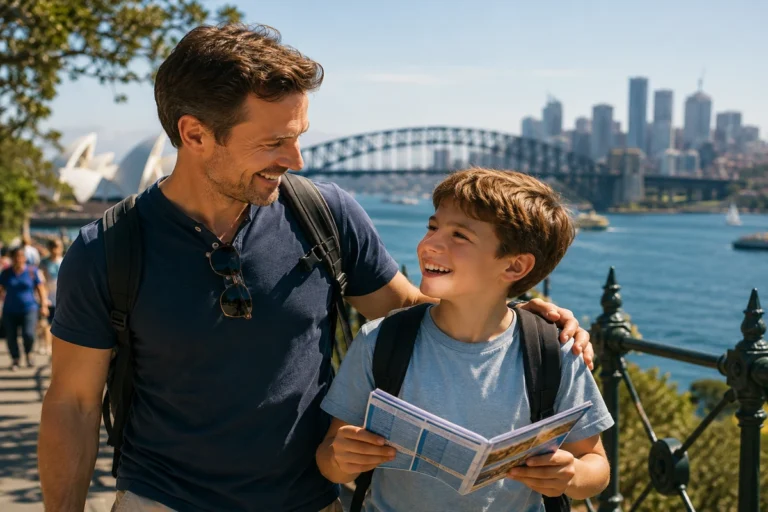
For international families, travel becomes a natural extension of the homeschooling philosophy. Moving between different regions exposes children to completely unique landscapes, languages, cuisines, and traditions.
These experiences broaden their understanding of the world in ways that standard textbooks alone simply cannot replicate. Geography becomes tangible when children see mountains, rivers, or coastlines firsthand.
History feels immediate when standing in places where major historical events actually occurred. Even short weekend trips become meaningful educational opportunities when children are encouraged to actively observe and ask questions.
Over time, this travel builds deep cultural awareness and an innate curiosity that enriches academic learning. This real-world lifestyle is a fantastic way to clear up common socialization myths about homeschooled expat children that many parents worry about.
❓ Encouraging Curiosity and Questions
One of the greatest benefits of combining online education with real-world exploration is that it naturally sparks curiosity. Children ask questions when they encounter unfamiliar situations.
They want to know why people eat certain foods, or how money works across different borders. They notice why buildings look different, or why some places experience completely unique climates.
These spontaneous questions naturally lead to further academic learning. A curious child might research local history, study global climate patterns, or explore cultural traditions on their own.
Online tools make it incredibly easy to investigate these student-led topics quickly. Instead of viewing curiosity as a distraction from formal education, many homeschooling families treat it as the absolute starting point for deeper learning.
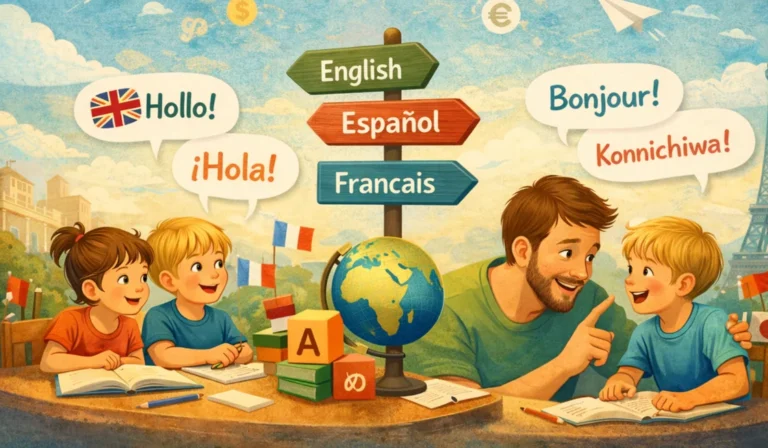
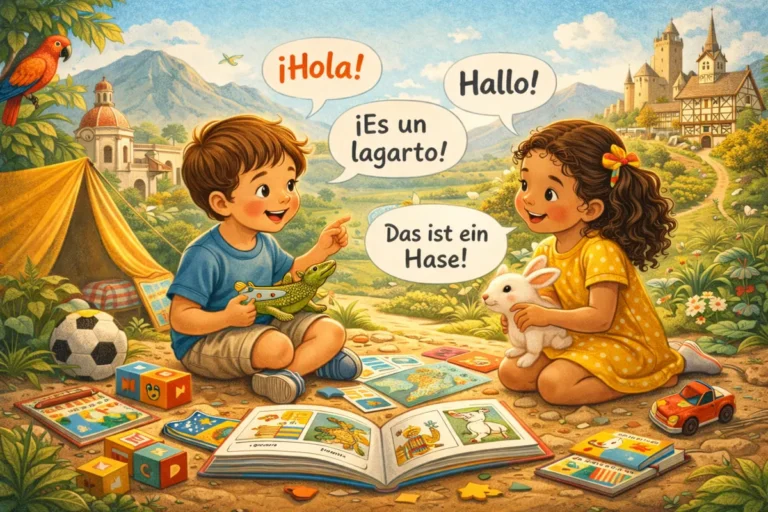
This habit helps kids master how to naturally acquire multiple languages by interacting with their surroundings. It shifts the learning process from passive absorption to active discovery.
⚖️ Maintaining Structure Without Rigidity
Blending online and real-world education works best when families maintain a predictable baseline routine. Without a set schedule, a completely open lifestyle can quickly become chaotic.
Many homeschoolers follow a simple daily structure where academic online classes happen during the morning hours. This is when children are usually focused, well-rested, and alert.
Afternoons are then left entirely open for hands-on projects with online courses, outdoor exploration, or community sports. This balanced division ensures that core subjects receive regular attention while still leaving space for experiential learning.
The exact schedule will vary between households, but consistency helps children develop excellent study habits. At the same time, flexibility remains incredibly important for mobile families.
Travel days, special community events, or unexpected local opportunities can easily shift the routine for a week. A flexible structure allows families to adapt without losing their long-term academic momentum.
Read More
If you want to discover how to keep your days running smoothly while traveling, look over our practical guide on how expat families balance travel and education without burning out.
🤝 The Social Side of Learning
Another major benefit of real-world education is face-to-face social interaction. While online platforms provide excellent academic instruction, many essential soft skills develop through physical experiences.
Conversations with neighbors, participation in community events, and meeting other families help children practice communication and collaboration. For international families, these daily interactions provide opportunities to experience entirely different perspectives.
Children who regularly engage with people from different backgrounds develop incredible adaptability and deep empathy. These traits are very difficult to teach through digital lessons alone.
- Community Sports: Join local athletic clubs to practice teamwork without language barriers.
- Neighborhood Events: Attend regional festivals to observe cultural traditions firsthand.
- Volunteer Projects: Participate in local cleanups to build a sense of global citizenship.
These real-world connections help kids cultivate a strong sense of identity. It directly supports long term identity development for third culture kids who are growing up between multiple cultures.
🔍 A Small Personal Observation
One thing that becomes incredibly clear after watching many homeschool families operate abroad is that education becomes less rigid than people expect. Instead of strict classroom schedules, learning flows naturally through daily life.
A science lesson might lead to an outdoor experiment. A language app might spark a conversation with a local shop owner. A geography lesson might inspire planning a family weekend trip.
When you learn to combine online classes with field trips, you stop worrying about counting school hours. When children start connecting ideas across different contexts, education becomes something they actively participate in rather than simply consume.
🎯 Finding the Right Balance
Combining online learning with real-world education does not require complicated or expensive planning. In many cases, it simply means allowing academic lessons to spark curiosity and then following that curiosity into practical experiences.
Some days may involve highly focused, screen-based learning. Other days might revolve entirely around regional exploration, travel, or complex hands-on projects with online courses.
Both forms of learning complement each other perfectly. Digital platforms provide the necessary structure and academic progression. Real-world experiences bring those exact lessons to life.
For parents who are also managing household finances across multiple borders, balancing these tools is highly efficient. It allows you to protect your budget while looking at specialized multi currency banking options for your lifestyle.
Together, these two pillars create a complete, well-rounded educational environment. They turn the entire world into an accessible learning space for your children.
🏁 Conclusion
Online learning has made homeschooling more accessible than ever for families living internationally. Structured lessons, digital classrooms, and interactive tools provide the academic foundation children need to build essential skills.
At the same time, real-world experiences remain a powerful part of learning. Exploring new environments, interacting with people from different cultures, and observing the world firsthand help children connect academic concepts with practical understanding.
For expat families, combining these two approaches can create a uniquely rich educational experience. When online lessons meet real-world exploration, children do not just learn information. They learn how the world actually works.