🌍 OPOL Method Explained for Expat Families


TLDR
- OPOL means each parent consistently speaks one specific language with the child.
- Consistency matters more than perfection or strict rules.
- It works best when each language has real emotional context and daily use.
- Mixing languages early is normal and not harmful.
- Literacy still needs separate, intentional support later.
Move abroad with kids and language questions start immediately. Which language should we speak at home? Will English fall behind? Are we confusing them?
At some point, you’ll run into the term one parent one language, commonly known as the OPOL method. It sounds structured, almost clinical, but in practice, it’s a surprisingly simple lifestyle rhythm that is frequently misunderstood by new expat families.
Used well, this bilingual family strategy becomes less of a teaching method and more of a natural household flow. Used poorly, it turns into a stressful performance that nobody enjoys, which is why understanding what is OPOL method core functionality is so vital for long-term success.
📊 The OPOL Strategy for Families: At a Glance
| Feature | The OPOL Approach |
| Core Rule | One parent, one language |
| Success Factor | 80% consistency in daily life |
| Child’s Role | Mapping people to communication systems |
| Primary Goal | Automatic language switching |
🧠 What the OPOL Method Really Means
The OPOL method is not about forcing bilingualism or creating a mini-classroom at the dinner table. It is about establishing predictable communication patterns that allow a child to categorize their world.
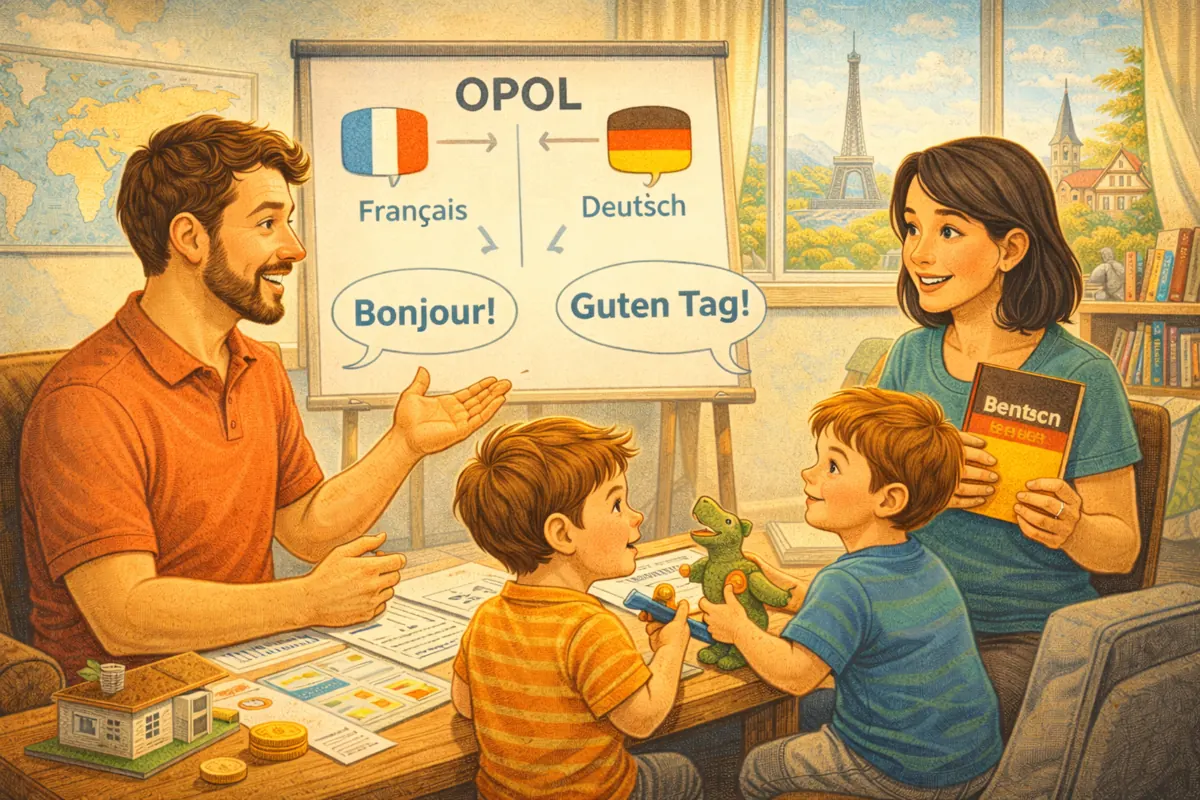
In a classic OPOL bilingual example, each parent consistently speaks a different language to the child. The specific languages don’t matter, but the stability of the person-to-language map does.
Children naturally organize language by social context rather than memorizing vocabulary lists. They map people to communication systems, eventually stopping the need for translation and starting to switch automatically.
💡 Expert Tip: Think of your household as having two distinct “operating systems.” A device runs smoothly when programs know exactly which system they belong to; random switching is what actually slows the “processing” down.
🔥 Why Consistency Beats Volume
Parents often assume exposure hours are the only thing that determines fluency. They believe that more language volume equals a better outcome for the child’s development.
But young children organize language primarily by relationship, not by raw quantity. This is a core component of a successful bilingual children language strategy because it gives the brain clear sorting rules.
If you are worried about the speed of acquisition, it helps to understand how long it really takes kids to become fluent in a second language. This perspective allows you to focus on the OPOL strategy for families without feeling the need to rush the results.
🤝 The Emotional Anchor Over Grammar
Children maintain languages that are tied to deep emotional connections and daily security. A language used only for “lessons” weakens quickly, while one used for comfort and jokes sticks deeply into the subconscious.
This emotional link is what preserves the minority language long-term. In many OPOL method success stories, the parents naturally created separate worlds where one language is for home routines and another is for community interaction.
When Dad reads bedtime stories in one tongue and Mom handles morning routines in another, children associate language with belonging. This is far more effective than any academic approach to a bilingual family strategy.
📖 Read Also: Creating a bilingual home environment abroad
🛠️ The OPOL Sustainability Toolkit
Maintaining a bilingual children language strategy long-term requires moving away from “training” and toward “living.” Here is how you make the OPOL method sustainable without burning out your household.
- The 80% Rule: Real life involves stressful mornings and family visits where you might occasionally switch languages. As long as you maintain your assigned language in 80% of interactions, the system will stay intact.
- Model, Don’t Correct: Strict correction rarely speeds up the process and often causes hesitation. Instead, repeat the child’s mixed sentence back to them naturally using the correct words in your assigned language.
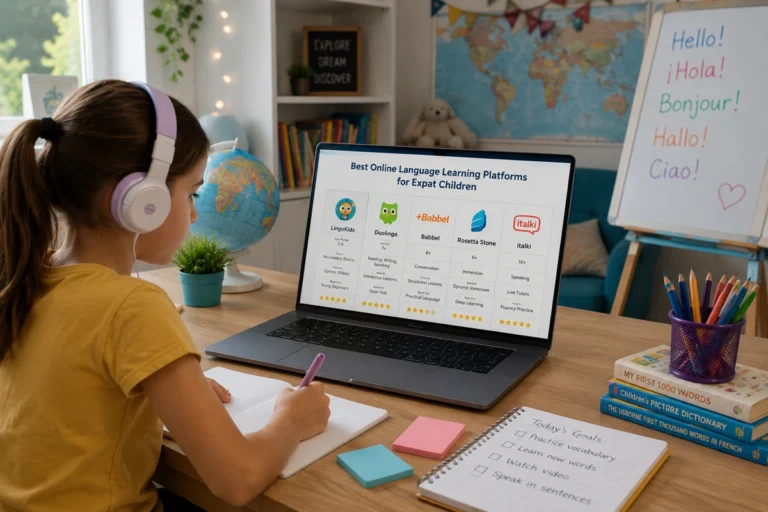
- Functional Necessity: If your language exists only inside the house, you need reinforcement. Use best online language learning platforms for expat children or regular calls with relatives to prove the language is socially useful.
- Identity over Performance: Let their bilingualism be a tool for connection. Avoid asking them to “show off” their skills for visitors, as this turns their unique skill into a performative chore.
Managing these dynamics is often a key part of preventing burnout while raising kids abroad. Keep the focus on the relationship and the linguistic accuracy will eventually follow the usage.
📚 School and the Literacy Pivot
International school parents often assume English education will maintain the language automatically. However, school language often becomes “academic” while the home language remains the only “emotional” register.
Without home use, a child might write great essays but struggle with casual conversation. This is why the OPOL method is so important even for kids in international schools, it protects the natural, spontaneous side of the language.
Many families find that predictable communication boundaries are what keep the minority language from becoming a “dead” academic subject. By keeping the home language conversational, you ensure they can actually use it in the real world.
Literacy is a separate skill that requires intentional support since brains are wired for speech but not for writing systems. You can support this by choosing a homeschool curriculum while living overseas that focuses on minority language reading.
💡 Expert Tip: Ten minutes of daily reading in the minority language over five years is more effective than a three-month intensive summer course. Consistency is your greatest ally.
🚀 Handling Resistance and Refusal
Around ages five to eight, many children temporarily reject the minority language. The community language usually feels socially “easier” or “cooler” because their friends use it.
Forcing responses rarely helps and can create long-term resentment. Continue speaking your language anyway, as comprehension remains even when their responses switch.
Most children return to active use once they recognize the practical value during travel or through new friendships. This is a common theme in OPOL method success stories, staying the course through the quiet years.
It is also vital to keep an eye on long-term identity development for third culture kids. When they feel proud of their heritage, the language becomes a badge of honor.
🏁 Conclusion: Finding Where Each Language Belongs
The OPOL method isn’t a dry curriculum; it’s a structure that helps children organize the linguistic world around them. When each language has a person and a purpose, kids simply absorb it as part of daily life.
Perfection doesn’t matter, but stability does. If you maintain calm consistency and stay patient through phases of resistance, the bilingual family strategy quietly does its job.
As you navigate this journey, remember to watch for the signs your child is thriving abroad. Years from now, you’ll realize they didn’t just learn two languages, they learned when each one belongs.