🛂What Legal Documents Every Expat Family Needs


TLDR
- Every expat family should secure core identity, residency, and parental documents before and after relocation.
- Proper legal paperwork protects children’s citizenship rights, schooling access, and healthcare eligibility abroad.
- Wills, guardianship arrangements, and power of attorney become essential once living internationally with dependents.
- Document requirements vary widely by country, so expat families must plan for multi-jurisdiction compliance.
- Keeping documents updated, translated, and authenticated prevents major legal and financial complications abroad.
Moving abroad with children changes more than your address. It quietly reshapes your legal identity in ways many families don’t fully anticipate until something urgent forces the issue. Paperwork that felt optional back home suddenly becomes the difference between smooth problem-solving and bureaucratic dead ends.
When you’re raising children abroad, you’re not just dealing with one system anymore. You’re often navigating two or more legal frameworks at the same time, and each one has its own expectations about who you are, what rights you have, and how your children are recognized. Getting ahead of that reality is one of the most stabilizing things you can do as an expat father.
Let’s break down the necessary documents for moving abroad and why they matter more than most people realize.
🛂 Passports and Proof of Citizenship
This sounds obvious, but it’s surprising how many families leave home with important paperwork for expat families that is close to expiration.
Every parent and child should have valid passports with at least 6–12 months of remaining validity. Some countries will deny entry or visa processing if passports are near expiry, even if technically still valid. If you are an American, you should regularly monitor U.S. passport requirements to ensure your family’s travel rights remain intact.
🛡️ Citizenship Protection Checklist:
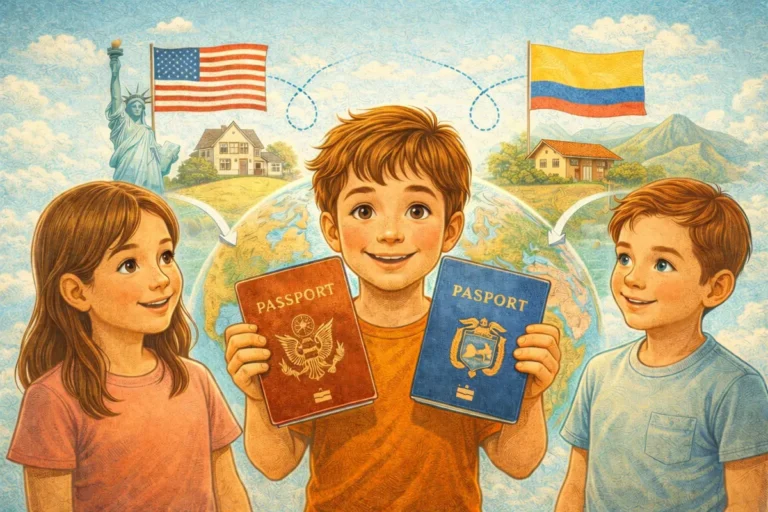
- Consular Birth Registrations: Essential for children born abroad to ensure they retain their parent’s citizenship.
- Dual Nationality Papers: Understand how dual citizenship works for children of expats so you can maintain both sets of rights.
- Passport Strategy: In an uncertain world, many families are building a Plan B passport strategy to increase global mobility.
📜 Birth Certificates and the Apostille Process
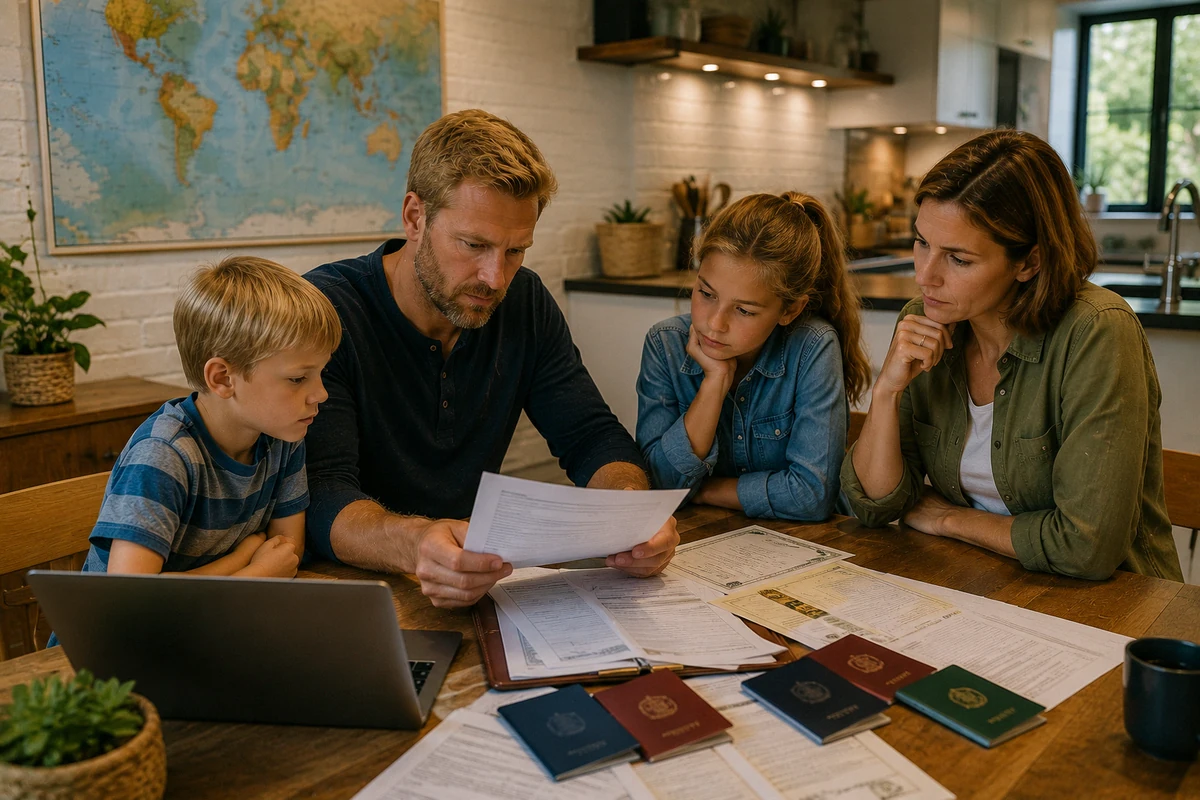
A child’s birth certificate is one of the most frequently requested expat legal documents. It’s used for school enrollment, residency applications, healthcare registration, and sometimes even banking.
If your child was born in one country but resides in another, you will likely need legalized versions of these papers. This is usually done through an Apostille, which is an international certification that makes the document valid in other countries that are part of the Hague Convention.
📂 Managing Vital Records:
- Certified Copies: Never give away your only original. Always keep multiple certified copies.
- Professional Translations: Some countries require translations from “sworn” or “court-certified” translators rather than just a standard agency.
- Family Status: Marriage certificates are equally vital for proving family ties during how to get residency visas for your family abroad applications.
🏠 Residency Permits and Visa Documentation
Once you settle in a new country, residency documentation becomes your primary legal anchor. This includes residence permits, long-stay visas, or dependent visas tied to a sponsoring parent. These are the most critical documents expat family members will carry daily.
📊 The “Visa-Dependent” Reality
| Document Type | Purpose | Expat Tip |
| Primary Visa | Legal stay for the breadwinner. | Often tied to employment contracts. |
| Dependent Visa | Legal stay for spouse and kids. | Validity is usually synced to the primary visa. |
| Work Permit | Right to earn local income. | Vital if you are looking for remote work that supports an expat family. |
Many families underestimate how closely dependent status is tied to the primary visa holder. If one parent’s status changes, it can directly affect the entire family’s legal standing, potentially leading to burnout while raising kids abroad.
🏥 Health Insurance and Medical History
Healthcare access abroad is often conditional on insurance coverage. Families should maintain proof of international health insurance policies or local coverage where applicable. This is part of the essential passports visas insurance expats toolkit.
💉 Medical Document Folder:
- Vaccination History: Frequently required for school enrollment.
- Insurance Policy Numbers: Keep these in your phone and printed in your wallet.
- Doctor Contacts: Essential if you need to find English-speaking doctors anywhere in the world.
- Healthcare Plan: Having a reliable healthcare plan for your kids overseas is a non-negotiable for long-term safety.
📚 School Records and Educational Documentation
If you have school-aged children, academic records are a core part of your expat family documentation list. Even if you are homeschooling legal abroad, you need to prove academic progress.
🏫 Educational Paperwork Needs:
- Transcripts: For placing children in the correct grade level.
- Standardized Testing: Helps evaluate education outcomes across different systems.
- Homeschool Portfolio: Essential if you are raising bilingual children without formal schooling and later decide to re-enroll in a traditional school.
⚖️ Power of Attorney, Wills, and Guardianship
This is not a comfortable topic, but it’s a necessary one. International living paperwork must include a plan for the “what ifs.”
A Power of Attorney allows a trusted person to legally act on your behalf in financial or administrative matters back home. Without it, simple tasks like managing money across multiple countries can become impossible if you are physically stuck in another time zone.
🛡️ The Guardianship Plan
Even more important for parents is guardianship planning. You need to clearly document who would care for your children if something happened to both parents.
Because laws vary widely, expat families often need legal guidance in both their home and host countries to ensure these plans are enforceable across borders. This is a foundational step in how expat families build long-term stability.
💰 Financial and Tax Documentation
Living abroad triggers tax obligations in more than one country. You must maintain records for expat legal documents related to your income and residency status to avoid double taxation or legal penalties.
💸 Key Financial Records:
- Tax Residency Certificates: Proof of where you pay your taxes.
- Bank Account Records: Vital for multi-currency family budgeting.
- Income Verification: Needed for visa renewals and renting property.
- Tax Knowledge: Read up on expat taxes made simple for families to stay compliant.
🏁 Final Thoughts
One thing I’ve noticed over time is that expat families who stay calm in legal situations usually prepared their paperwork long before they needed it. It’s not about creating bureaucracy; it’s about removing friction from the moments where you really don’t want extra stress, like hospital visits or visa renewals.
If you treat your family’s documentation as a living system, everything gets easier. It makes managing work and parenting more predictable, which is the key to a successful life abroad.
Do you have a “Grab-and-Go” folder for your family’s essential documents, or is your paperwork scattered across multiple digital and physical locations?