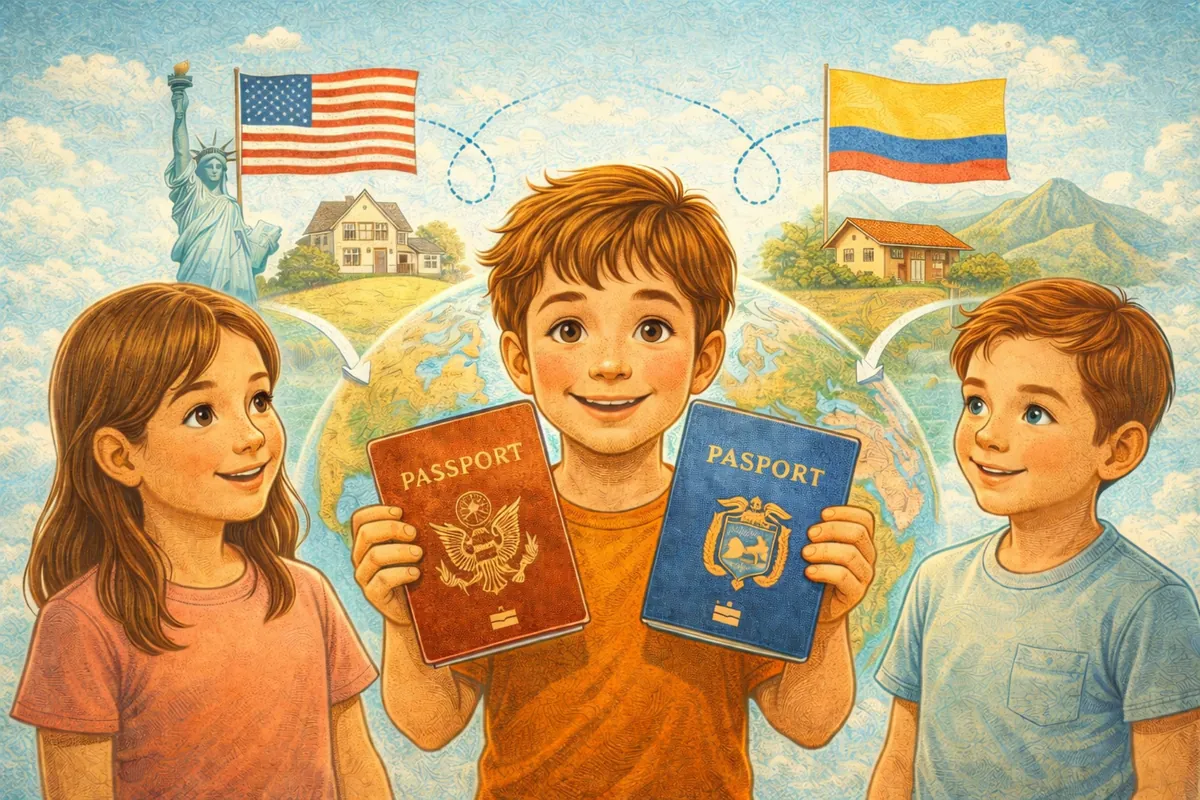
🛂How Dual Citizenship Works for Children of Expats


TLDR
- Children of expats can often hold dual citizenship through birth location, parent nationality, or naturalization.
- Laws vary widely by country, making it essential to understand dual citizenship requirements expats face.
- Dual nationality offers benefits like access to education, healthcare, and residency rights in multiple countries.
- Some countries restrict or regulate dual citizenship, especially as children reach adulthood.
- Planning early helps families secure long-term citizenship rights for children abroad.
If you are raising children abroad, you have likely wondered how passports, residency, and nationality will play out long term. It is not just paperwork; it shapes where your child can live, study, and work later on.
The concept of dual citizenship expats often deal with comes down to one simple idea: a child can legally belong to more than one country at the same time. However, how that happens depends entirely on the laws of each country involved.
There is no universal system. Every country sets its own rules, and those rules can interact in complex ways. This complexity is why many fathers find themselves managing culture shock not just socially, but legally as well.
🏛️ The Two Main Paths to Nationality
Most countries grant citizenship in one of two ways:
- Right of the Soil (Jus Soli): If your child is born in certain countries, they automatically receive citizenship there, regardless of your nationality. This is common in the United States, Canada, and several countries in Latin America.
- Right of Blood (Jus Sanguinis): Your child inherits citizenship from you, even if they are born abroad. Many European and Asian countries follow this model.
In practice, many expat families end up with both. A child born in one country to parents from another may qualify for dual nationality for expat children without any additional steps.
⚖️ When Registration is Automatic vs. Manual
Here is where things get more nuanced. While some countries automatically recognize both citizenships at birth, others require you to register the birth abroad with your home country authorities within a specific timeframe.
Missing that window can lead to “statelessness” or complex legal battles to prove parentage later in life.
🚩 Key Registration Risks to Watch
- Strict Deadlines: Some nations require a Report of Birth within the first 30 days.
- Proving Lineage: You may need DNA proof or extensive historical documentation if you wait until the child is older.
- Consular Availability: Appointments at some embassies can be booked out for months.
Understanding how dual citizenship works expat kids often means looking at both countries’ laws side by side, not just one in isolation. For instance, some countries may only allow the father to pass on citizenship if the parents are legally married at the time of birth.
🛂 The Process of Obtaining a Second Passport for Kids
If your child qualifies for more than one nationality, the next step is usually documentation. This often involves registering the birth, applying for citizenship confirmation, and then applying for a passport.
📂 Essential Document Checklist
- Original Birth Certificate: Often requires an Apostille or authentication.
- Proof of Parent Citizenship: Current passports and birth certificates of the parents.
- Marriage Certificate: Crucial for countries that base citizenship on legal marital status.
- Official Translations: Any documents not in the target country’s official language must be professionally translated.
Obtaining a second passport for kids is not complicated in principle, but it does require attention to detail. Small errors or outdated “Consular Report of Birth” forms can slow things down significantly.
💎 Benefits That Go Beyond Travel Perks
It is easy to think of dual citizenship as just a travel perk. Two passports and easier border crossings are great, but the real value goes deeper into the child’s future quality of life and career potential.
🌟 Long-Term Advantages
- Education Access: Eligibility for local tuition rates at top universities in two different regions.
- Healthcare Support: Access to reliable healthcare plans and public social nets in both nations.
- Work Rights: The ability to work across entire regions (like the EU or ASEAN) without a visa.
- Identity Foundation: Supporting their long-term identity development as global citizens.
🎖️ Responsibilities and Legal Obligations
Dual citizenship is not just about benefits. It also comes with responsibilities. This is where many families get caught off guard. They focus on the advantages but overlook the obligations tied to child citizenship expat situations.
📊 Potential Obligations Table
| Responsibility | Common Impact |
| Taxation | Filing income tax reports (especially for US citizens regardless of residence). |
| National Service | Mandatory military or civil service requirements for adult males. |
| Voting Duties | Some countries require citizens to vote or risk administrative fines. |
| Documentation | Keeping passports and records up to date every 5 to 10 years to avoid lapse. |
It is worth understanding these dual citizenship requirements expats face early so there are no surprises down the line. If you are already managing money across multiple countries, adding a second tax jurisdiction is a major factor to consider for your child’s future wealth.
🎂 What Happens When Your Child Turns 18?
This is a big milestone in the world of dual citizenship expats. Some countries allow dual nationality indefinitely. Others, such as Japan or certain Middle Eastern nations, require individuals to formally “choose” one citizenship upon reaching adulthood.
📅 The Age of Maturity Decisions
Even in countries that allow dual citizenship, there may be administrative steps required to maintain it. This could include renewing passports, registering residency status, or confirming citizenship status.
Planning ahead matters. If your child grows up assuming they have two nationalities but fails to complete required steps, they could lose one unintentionally.
🧬 Cultural Identity vs. Legal Identity
This part is less about paperwork and more about the psychological reality of the “Third Culture Kid.” Your child might legally hold two citizenships, but their sense of identity may not align neatly with those documents.
If your family is using the OPOL method or raising bilingual children without formal schooling, their connection to their home country might be purely linguistic. From a practical standpoint, though, citizenship rights for children abroad provide the framework that supports those experiences. Identity is fluid, but legal status is the “hardware” that lets the “software” of culture run.
🚫 Common Pitfalls Expat Families Run Into
One of the biggest mistakes is assuming everything happens automatically. In some cases, parents delay registering a birth because they think there is no urgency. Years later, they discover the process has become far more bureaucratic.
⚠️ Critical Errors to Avoid
- Outdated Information: Laws change. What applied to your first child in 2020 may not apply in 2026.
- Assuming Residency equals Citizenship: Living in a country for years does not automatically make your child a citizen of that country.
- Ignorance of Military Service: Failing to realize a son may be drafted if he visits his second “home” after age 18.
Staying informed is part of the process, even if it is not the most exciting part. Many families find that becoming a citizen of the world requires constant legal vigilance.
🚀 Practical Steps to Get It Right
If you are navigating this now, start with clarity.
- Verify Official Sources: Use embassy websites to confirm current dual citizenship requirements expats need to meet.
- Handle Documentation Early: Birth registration is much easier when done promptly after delivery.
- Organize Your Records: Keep certificates, translations, and tax residency documents in one secure place.
- Consult Experts: If your situation involves complex laws (like some Asian nations), a legal consultation is worth the cost to avoid losing a valuable passport.
🏁 Conclusion
Dual citizenship for children of expats is a quiet topic that becomes vital as your children grow. It affects where they can live, what schools they can attend, and how flexible their future can be. The process is not always straightforward, but it is manageable with a bit of planning.
Have you already started the registration process for your child’s second nationality, or are you still researching which path fits your family best?