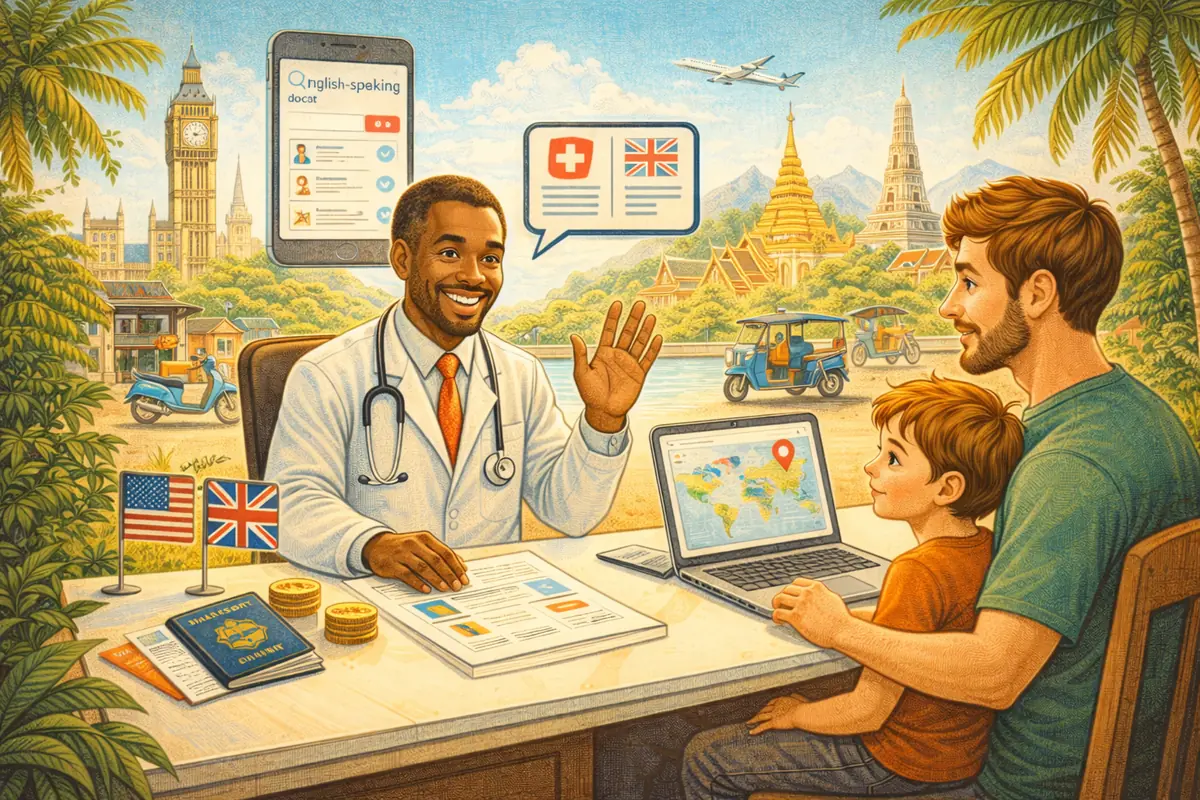
🩺How to Find English-Speaking Doctors Anywhere in the World

TLDR
- Finding reliable English speaking doctors abroad requires a mix of directories, local networks, and preparation.
- International doctor directories and expat communities are often the fastest way to identify trusted providers.
- Private hospitals and international clinics are more likely to offer medical care for English speakers abroad.
- Telehealth for expats can bridge gaps when local language barriers exist.
- Building a healthcare plan early makes emergencies far less stressful for your family.
You don’t really think about language barriers in healthcare… until you need it. It’s one thing to order food or sort out a taxi in a new country. It’s another to explain your child’s symptoms to a doctor when things feel urgent.
That’s where having access to English speaking doctors abroad becomes more than a convenience. It becomes essential.
For an expat father, especially those moving frequently, figuring this out early saves a lot of stress later. And the good news is, it’s far more doable today than it was even a decade ago. It is as fundamental to your security as building an emergency fund or understanding tax rules overseas.
🏥 1. Start With International Hospitals and Clinics
If you’ve just landed somewhere new, your safest first step is usually a private hospital or an international clinic. In many countries across Asia and Latin America, private healthcare facilities actively cater to foreigners. That means multilingual staff, internationally trained physicians, and systems designed to handle foreign insurance.
Doctors in these settings often receive part of their training in English-speaking countries, or they work regularly with international patients. As a result, communication tends to be clear and efficient. This is often the easiest way to access global English-speaking physicians without spending days searching.
| Facility Type | Language Probability | Service Level |
| International Hospital | Very High | Full specialized care |
| Private Clinic | High | Primary care & diagnostics |
| Public Hospital | Low to Moderate | Emergency focus |
📂 2. Use an International Doctor Directory
When you want more options beyond major hospitals, an international doctor directory expat tool becomes incredibly useful. These directories list physicians by location, specialty, and language capability. Many allow you to filter specifically for English-speaking providers, which cuts through a lot of noise.
They’re especially helpful in cities where international clinics aren’t concentrated in one area. Instead of relying on guesswork, you can build a shortlist of doctors before you even arrive. For a proper expat doctor search, this is usually one of the most efficient starting points.
💡 Expert Tip: Check the CDC Travel Health notices before you move to see if there are specific vaccinations or local health risks you should discuss with your new doctor.
🤝 3. Tap Into Expat Communities
There’s a pattern you’ll notice pretty quickly living abroad. Expat communities tend to figure things out fast and share what works. Local groups, whether online or in person, are often the best source of real-world recommendations. Parents especially are quick to share which pediatricians communicate clearly, which clinics are reliable, and which ones to avoid.
When it comes to finding English speaking doctors abroad, nothing beats firsthand experience. Reviews from people in the same situation as you tend to be more practical than generic ratings. I
’ve personally found that a single good recommendation from another parent can save hours of research, helping you avoid the common mistakes expat parents make.
🎓 4. Look for Doctors With International Training
Not all English-speaking doctors advertise it clearly. Sometimes you need to read between the lines. One reliable indicator is where a doctor trained or practiced. Physicians who studied or worked in countries like the US, UK, Australia, or Singapore often have strong English proficiency.
Many clinics list credentials publicly, so it’s worth taking a few extra minutes to check. This small step can significantly improve your experience, especially in more complex medical situations. It’s not a guarantee, but it’s a strong signal when doing an expat doctor search for global English-speaking physicians.
📱 5. Don’t Overlook Telehealth Options
Telehealth for expats has quietly become one of the most useful tools available. If you’re in a location where English speaking doctors abroad are limited, or you simply want a second opinion, remote consultations can fill the gap.
Many international platforms connect you with licensed physicians who operate entirely in English.
This works particularly well for non-emergency situations like follow-ups, general advice, or ongoing care management. While your children might be naturally acquiring multiple languages, you don’t want any “translation errors” regarding their health.
💊 6. Pharmacies Can Be Surprisingly Helpful
In many countries, pharmacists are highly trained and often speak basic to good English, especially in urban areas. They can guide you on minor issues, recommend over-the-counter treatments, and even point you toward reputable doctors.
If you’re trying to find English speaking doctor overseas options quickly, a local pharmacy can sometimes point you in the right direction faster than a search engine. It’s a useful first step when you’re still managing culture shock and getting oriented.
🛡️ 7. Check With Your Insurance Provider
If you have international health insurance, use it to your advantage. Most providers maintain a network of approved clinics and doctors, many of whom are vetted for language capabilities. They can often recommend facilities where medical care for English speakers abroad is standard.
Some insurers even offer concierge-style support, helping you book appointments or locate specialists. This is one of the easiest ways to build a reliable healthcare plan without starting from scratch.
📖 Read More: Staying organized with your medical records is as important as tracking educational progress when you don’t have a traditional school system to do it for you.
📍 8. Pay Attention to Location Within the City
Here’s something that doesn’t get mentioned enough: where you are within a city matters. In many countries, English-speaking doctors are concentrated in specific neighborhoods. These are often areas with higher numbers of expatriates, international schools, or business districts.
If you’re living a bit further out, your options may be more limited. In that case, planning ahead becomes even more important. Knowing where to go before you need it can make all the difference in how expat families build long-term stability.
📝 9. Prepare Before You Actually Need a Doctor
This might be the most practical advice of all. Don’t wait until someone is sick to figure out your healthcare setup. Take an afternoon when things are calm and build a short list of options.
The Expat Healthcare Prep-List:
- Identify a nearby clinic and a primary hospital.
- Save their contact details in your phone.
- Verify they offer medical care for English speakers abroad.
- Map the route from your home (and check for traffic patterns).
- Keep a digital copy of your family’s medical history.
It sounds simple, but in a stressful moment, having that groundwork done feels like a huge advantage, much like having your daily routines already established.
🏁 Conclusion: Build Your System Before You Need It
Finding English speaking doctors abroad isn’t about one perfect solution. It’s about layering a few reliable strategies. Use international clinics for immediate access. Lean on an international doctor directory expat for broader options. Tap into expat communities for real-world insights. And keep telehealth for expats as a backup when needed.
When you combine these, you create a system that works wherever you go. And that’s really the goal: not just solving the problem once, but knowing you can find English speaking doctor overseas options again and again, no matter where life takes your family. When you are raising children abroad, peace of mind is the greatest luxury you can have.