🏥What to Do in a Medical Emergency Abroad With Kids

TLDR
- Stay calm and assess the situation first, your response sets the tone for your child.
- Know local emergency numbers, hospital options, and insurance procedures before anything happens.
- Keep essential medical information and documents easily accessible at all times.
- Prioritize reaching appropriate care quickly, even if that means paying upfront.
- Follow up after the emergency for recovery, insurance claims, and future preparedness.
No matter how well you plan your life abroad, a medical emergency abroad has a way of showing up unannounced. When it involves your child, everything suddenly feels more intense and uncertain, especially in a country that isn’t your own.
The goal isn’t to eliminate that stress completely. But you can reduce the chaos significantly if you have a medical emergency plan expat family members can follow. A clear plan makes a real difference when seconds count, much like how building an emergency fund provides a safety net for your family’s future.
🧘 1. Start With the Most Important Step: Stay Steady
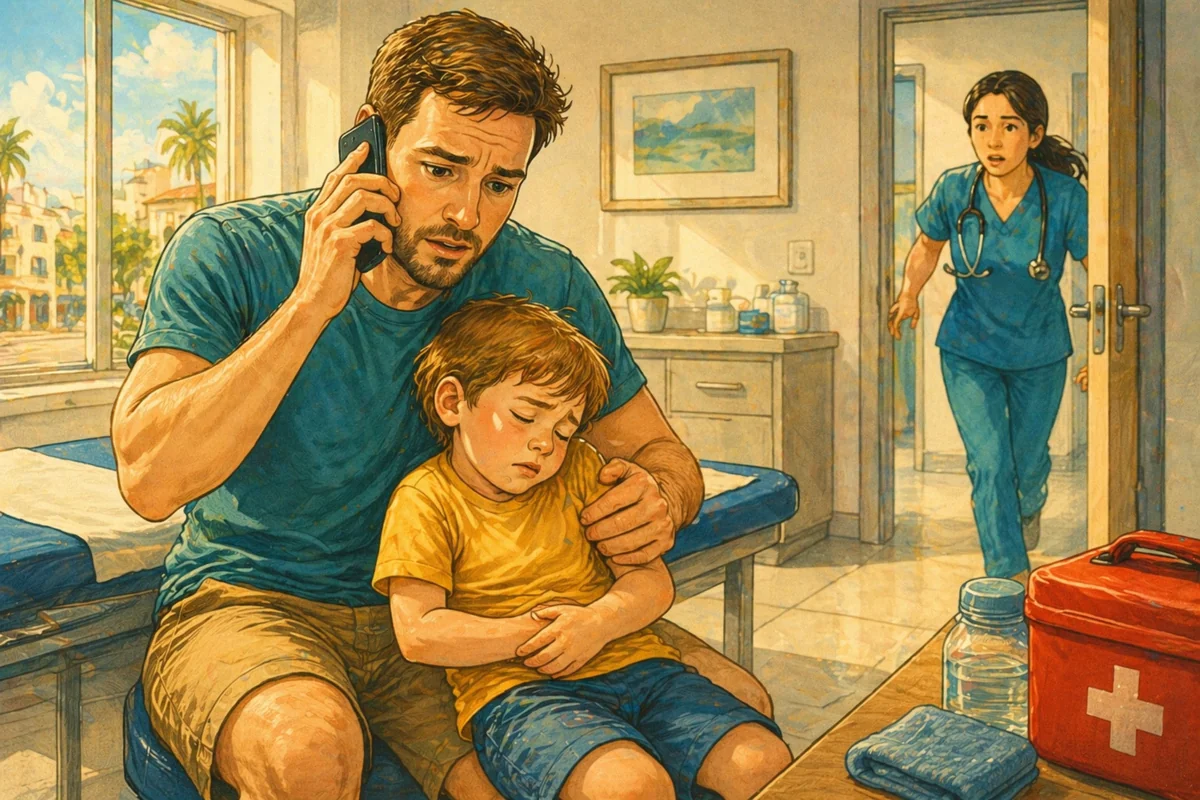
In an emergency, your child will look to you first. If you’re calm, they’re more likely to stay calm too. This is a core skill for any expat father dealing with the real challenges of raising children abroad.
Slowing yourself down for even a few seconds helps you think clearly. It allows you to assess what’s happening, is it a breathing issue, a high fever, or a physical injury?, rather than reacting blindly.
Those first moments matter because you create a sense of control when things feel chaotic. If you are managing culture shock, you already know that the “panic response” is your worst enemy in a new environment.
📞 2. Know the Local Emergency System Before You Need It
Every country handles emergencies differently. The phone number isn’t always 911, and ambulance response times vary. Before a crisis hits, research your emergency care options overseas.
In some countries, “Ambulance” services are essentially just transport vans with no paramedics; in others, they are mobile ER units.
- Local emergency phone number: Save this as a primary contact and put it on a fridge magnet.
- Reputable Hospitals: Identify which private or international clinics cater to foreigners.
- Transport: Decide if an ambulance is reliable or if self-transport (or a taxi) is faster.
- The “Triage” Reality: In many public systems abroad, you might wait hours unless you know how to advocate for your child’s priority level.
In many regions, self-transport is significantly quicker. You can find more details on global standards via the WHO emergency care systems overview.
🎒 3. First Aid Traveling with Children: The Essential Kit
While you’re heading to a hospital, you may need to provide immediate first aid traveling with children. Your “Go-Bag” should be packed long before the emergency.
What to keep in your emergency kit:
- Dressings: Various sizes of bandages, sterile gauze, and medical tape.
- Antiseptics: Alcohol wipes and antibiotic ointment.
- Tools: Tweezers (for stings/splinters), a digital thermometer, and blunt-nosed scissors.
- Medications: Child-safe ibuprofen or acetaminophen, antihistamines, and rehydration salts (ORS).
- Instructional: A basic first aid manual in both English and the local language.
Having these tools at home helps you manage the situation until you can reach emergency care children overseas.
📂 4. Keep Medical Information Ready and Accessible
When you arrive at a hospital, you’ll be asked for basic data. Trying to recall these details while handling urgent care abroad is difficult. Keep a digital or printed record for each child:
| Essential Data | Details to Include |
| Identity | Full name, date of birth, and passport number |
| Allergies | Foods, medications, or environmental triggers |
| History | Relevant medical conditions and blood type |
| Medications | Current dosages and frequency |
| Insurance | Policy number and international claim phone number |
This level of organization is just as vital as tracking your child’s educational progress in a non-traditional setting.
🚀 5. Don’t Hesitate to Seek Care Immediately
One mistake some expat families make is second-guessing whether a situation is serious enough. They worry about the cost of online education or their multi-currency family budget, and let financial anxiety slow them down.
If it feels like a medical emergency abroad, treat it like one. Getting to a professional is the priority; you can sort out managing money across countries later. In many countries, private hospitals provide faster service but require upfront payment. Knowing these emergency care options overseas ahead of time helps you make the call faster.
💳 6. Understand the “Cash-First” Reality
Healthcare systems vary wildly. In many developing nations, payment is expected upfront, which can catch families off guard.
- Payment Methods: Carry a credit card with a high limit that works locally.
- Insurance: Know if your provider offers direct billing or requires reimbursement.
- Coverage: Check if you have specialized international health insurance designed for expats.
💡 Expert Tip: Check the CDC Travel Health notices for your region to see if specific local health risks require specialized insurance riders or vaccinations.
🗣️ 7. Communicating With Medical Staff
Language barriers add stress. Even if you are creating a bilingual home environment, medical terminology is a different beast.
- Translation Apps: Use them for specific symptoms (e.g., “seizure,” “allergic reaction,” “poisoning”).
- Staff: Ask for English-speaking staff (common in international clinics).
- Advocacy: Stay with your child. If something doesn’t feel right, speak up. Request an interpreter if you feel the medical advice is being lost in translation. This is especially important for the long-term identity development for third culture kids, they need to feel their parents are in control of the situation.
🩹 8. Follow Through and Emotional Recovery
Once the urgent situation is under control, keep all documentation, medical reports, receipts, and prescriptions, for your insurance claims. This is a key part of handling urgent care abroad successfully.
Also, don’t overlook the emotional side. Even if they are thriving abroad, a medical scare can be unsettling. Reassure them in a calm, age-appropriate way.
If your family is homeschooling long-term, you might even use the experience as a practical lesson in biology or community systems, as some organizations discuss education through a human rights lens.
🏁 Final Thoughts: Build Your System Now
A medical emergency abroad is manageable with the right framework: stay calm, act quickly, and follow through. By building a reliable healthcare plan today, you can handle emergency care children overseas might need tomorrow with total confidence.
Preparation is what keeps your family stable. It allows you to move past the “what if” fears and get back to building long-term stability for your family. Once you’ve handled one what to do if child sick abroad scenario successfully, the rest of your expat journey will feel much more secure.