⚽ How to Vet Local Sports Teams for Your Expat Child


TLDR
- A high-quality local sports club should prioritize physical safety, personal growth, and social connection over a win-at-all-costs mindset.
- Observing active training sessions, checking coach behaviors, and interviewing current parents will give you the real story behind the marketing brochure.
- Expat kids sports programs offer a powerful fast-track for language immersion and natural community building in your new host country.
- Comprehensive safeguarding protocols, emergency injury plans, and qualified staff are non-negotiable baselines for any youth athletics abroad.
- Choosing an inclusive environment helps your child establish deep roots, manage relocation stress, and build long-term confidence overseas.
One of the fastest ways for a child to settle into an entirely new country is through the universal language of play. A football practice, local swimming club, martial arts class, or weekend basketball league can spark fast friendships that might otherwise take months to form in a classroom.
Participating in structured activities provides a comforting routine, steady confidence, and an immediate sense of belonging. For families navigating the unique raising children abroad the real challenges, these organic social outlets matter much more than many parents realize at first.
However, youth sports programs vary wildly from region to region, and picking the wrong environment can quickly lead to immense frustration.
By treating sports selection with the same careful attention you give to finding local housing or setting up a multi-currency family budget for expat families, you can turn an extracurricular hobby into a cornerstone of your child’s international upbringing.
👟 Start With Your Child, Not the Sport
Many well-meaning parents kick off their search by asking which specific club has the biggest trophy cabinet or the highest local profile. A far better strategy is to evaluate which specific social climate matches your child’s distinct personality and emotional needs at this moment.
Every young athlete brings a different set of personal goals, fears, and motivations to the playing field. Some thrive in highly competitive settings, while others are simply looking for active exercise, lighthearted fun, and essential social development abroad.
Expert Tip
Sit down with your child before researching clubs. Ask whether they want to learn advanced technical skills, find a relaxed hobby, or simply make a few new neighborhood friends.
| Child’s Core Goal | Recommended Program Style | What to Avoid |
| High Performance | Elite academies, specialized training clubs | Purely recreational meetups |
| Local Integration | Community leagues, neighborhood teams | High-travel travel squads |
| Social Confidence | Inclusive clubs, multi-sport discovery programs | High-pressure, cut-throat tryouts |
Taking a relaxed, child-led approach ensures your child won’t feel completely overwhelmed during an already sensitive transition period. Matching the intensity of the league to your child’s internal drive is key to seeing those early signs your child is thriving abroad.
🗺️ Understand the Local Sports Culture
Youth athletics abroad operate under totally different social norms depending on where you land in the world. In some nations, community sports are highly structured and integrated directly into the academic pipeline, while other regions rely entirely on private clubs.
For instance, the structured layout of youth sports Latin America looks incredibly different from the school-system sports found across North America. If you are moving between these regions, the unspoken expectations around practice frequencies, parent volunteer hours, and travel days can catch you completely off guard.
- High-Competition Markets: Require multiple mandatory weeknight practices and heavy weekend travel obligations.
- Participation-First Cultures: Prioritize equal playing time, multi-sport rotation, and casual community festivals.
- Club-Centric Ecosystems: Run completely independently of local schools, requiring parents to handle all transit and logistics.
Before paying hefty registration fees, spend time studying how local families interact with these organizations. Gaining this structural context makes it much easier to ensure the team culture matches up cleanly with your own family values and daily routines that work for expat families.
🏟️ Visit Before You Commit
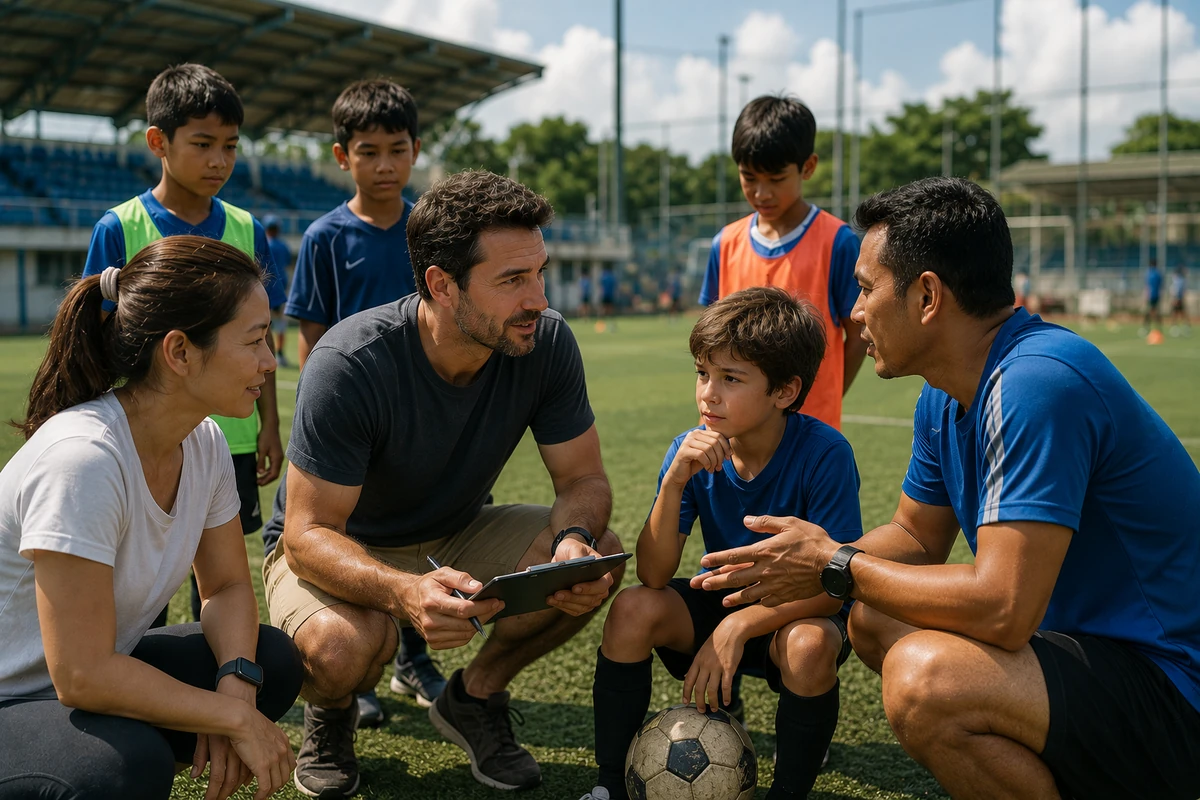
A shiny website, sleek social media clips, and glossy pamphlets tell you absolutely nothing about the day-to-day realities of a training session. One of the single best investments you can make is attending an active practice as a spectator before signing a single piece of paperwork.
While sitting on the sidelines, watch the real-time dynamics of how the staff runs the session. Check if the kids look genuinely engaged, note how the coaches address mistakes, and see if the overall environment feels structured or chaotic.
- Positive Indicators: Clear organization, encouraging language, high player activity levels, and mutual respect between peers.
- Negative Indicators: Long lines of bored kids waiting for a turn, aggressive adult yelling, and clear favoritism toward top tier players.
You will consistently learn more in twenty minutes of quiet, real-world observation than you ever will from reading online forums. This is especially true when you are trying to pick out premier finding soccer academies overseas or finding a balanced local gymnastics group.
📋 Evaluate the Coaches Carefully
The specific adult leading the team will almost single-handedly determine the overall quality of your child’s athletic experience. Formal teaching certifications are excellent indicators of expertise, but real-world behavioral traits matter just as much on the grass or court.
Great mentors understand the basics of child psychology and know how to instruct complex skills while maintaining an inclusive atmosphere. When observing staff, pay close attention to how they communicate under stress.
What to Look For: Focus on whether the coaches praise genuine effort, display patience with beginners, and offer constructive tips rather than harsh criticism.
For children who are already spending their days managing significant cultural adjustments, having a patient mentor can completely transform their experience. Outstanding human skills from your coaching staff are vital whenever you are managing coaching expat children who might still be picking up the local dialect.
🛡️ Ask About Safeguarding Policies
Child safety and operational protection must never be treated as minor background details when joining a new league. Fully reputable sports organizations always maintain clear, written protocols covering adult-to-child ratios, safe transportation, and immediate injury management.
You can learn more about international benchmarks for physical education and youth development by reviewing global standards like the UNESCO youth framework. Responsible clubs will always be eager to walk you through their specific background checks and medical emergency procedures.
- Do they have a designated first-aid officer present at every single match?
- Are all staff members fully vetted through local criminal record databases?
- What are the explicit rules regarding private, one-on-one digital messaging between coaches and players?
Never hesitate or feel uncomfortable asking these direct questions during your initial tour. Professional groups that are actively aligned with international groups like Safe in Sport guidelines will welcome your questions as a sign of responsible parenting.
🗣️ Speak With Other Parents
Active parents are your absolute best source for unvarnished, objective information about how a sports club actually operates behind the scenes. Chatting with moms and dads on the sidelines gives you a clear window into the real club culture.
Ask them about the consistency of scheduling, how the board handles sudden disputes, and whether their children look forward to attending training. You will find that most families are incredibly open about sharing their honest experiences with newcomers.
- Communication: Are schedule changes sent out well in advance or texted at the last absolute minute?
- Financial Clarity: Are there hidden tournament costs, uniform fees, or unexpected travel expenses later in the season?
- Inclusion: Do backup players get meaningful development opportunities during weekend matches?
Getting these candid perspectives helps you avoid administrative headaches, allowing you to focus your energy on supporting your child’s emotional growth and ensuring they show clear signs your child is thriving abroad.
🏆 Look Beyond Winning Records
It is incredibly common for youth academies to showcase massive trophy displays and boast about undefeated tournament records. While winning is certainly fun for the kids, it should rarely be an expat family’s main metric for success.
A program that is single-mindedly obsessed with short term wins will frequently overplay a tiny handful of early developers while ignoring the rest of the roster. True youth sports programs focus heavily on building long term coordination, resilience, and personal discipline.
| Program Philosophy | Primary Roster Impact | Long-Term Outcome |
| Result-Obsessed | Favors elite players, overlooks beginners | High stress and rapid dropouts |
| Growth-Obsessed | Equal opportunity, structured skill steps | Balanced confidence, lifelong fitness |
Choosing an organization focused on steady developmental progressions helps protect your child from premature burnout. This balanced perspective keeps sports a fun, stress-relieving outlet that complements other lifestyle paths, like families exploring a homeschool curriculum while living overseas.
🗣️ Consider Language and Communication
Enrolling your child in local teams is an absolute powerhouse method for fast-tracking natural language immersion. On the field, expat kids sports activities provide context-rich visual cues that help children connect spoken words to concrete physical movements.
Your child does not need to be completely fluent before their very first day on the field. In fact, many children discover how kids naturally acquire multiple languages abroad far faster through playground games than through formal worksheets.
Communication Checklist
- Are the coaches comfortable using non-verbal demonstrations for complex drills?
- Do local teammates step up to translate or guide newcomers through games?
- Is the overall social environment patient with children who are still learning the language?
Watching these organic field interactions tells you everything you need to know about the club’s true warmth. If you want to dive deeper into home language planning alongside sports immersion, take a look at our breakdown of the OPOL method explained for expat families.
🏗️ Assess Facilities and Equipment
The training facilities your child uses do not need to look like an Olympic village, but they absolutely must be clean and structurally sound. Well-maintained playing areas, secured locker rooms, and functional equipment are simple reflections of a well-run organization.
Walk around the grounds to check the playing surfaces for visible hazards like deep potholes or broken glass. Pay attention to how the club manages basic daily necessities during long summer sessions.
- Hydration Stations: Is clean drinking water readily accessible to all players near the fields?
- Weather Safety: Are there clear lightning evacuation protocols or accessible shaded areas during extreme heat?
- First Aid Access: Is an updated, fully stocked medical kit visible near the main coaching benches?
A simple, basic field managed with high structural standards is infinitely better than a flashy stadium with poor safety oversight. Prioritizing these foundational safety details helps you prevent avoidable injuries while keeping your family healthy and active.
⏰ Understand Time Commitments
The hidden time demands of youth sports can rapidly take over a family’s entire weekly schedule if you don’t map out expectations ahead of time. Some local leagues require simple commitments of an hour or two on weeknights, while competitive clubs demand heavy weekend travel.
Before signing the registration page, map out the entire seasonal calendar to see how it fits against your current commitments. Make sure to ask about hidden scheduling factors.
- What is the club’s official stance on missing occasional practices due to family travel?
- Are tournament locations close to home or do they require multi-day regional travel?
- Do practice schedules shift unexpectedly based on daylight hours or changing seasons?
Finding a balanced team that naturally respects family time ensures that extracurricular activities support your family life instead of overwhelming it. Protecting this time balance is essential for preventing exhaustion and preventing burnout while raising kids abroad.
🤝 Watch How the Team Handles New Players
Stepping onto a new sports field can be an intimidating experience for any child, but doing so in a foreign country adds an extra layer of social pressure. The specific way a coaching staff welcomes a new face on day one tells you everything about their true club culture.
Watch whether the coaches take a moment to introduce your child to the rest of the squad or simply tell them to join the back of the line. Supportive groups often pair a newcomer up with an experienced buddy to help them navigate the first few drills smoothly.
- Inclusive Onboarding: Leads directly to rapid belonging, lower performance anxiety, and quick local friendships.
- Passive Onboarding: Results in immediate visual isolation, heightened anxiety, and a sudden desire to quit the team.
Those initial couple of training sessions are critical for shaping your child’s long term outlook on the sport. A thoughtful, structured onboarding process can turn natural first day nerves into genuine excitement, providing a fantastic anchor for long-term identity development for third culture kids.
🚗 Evaluate the Parent Culture
The adults sitting on the sidelines often shape the overall emotional environment of a youth sports club just as much as the coaching staff. Some teams cultivate a wonderful, welcoming parent community, while others can become hotbeds of intense pressure and unnecessary sideline drama.
Take a few minutes during games to quietly observe how the parents behave in the stands. Note whether they cheer enthusiastically for all the children on the field or scream angrily at the referees over minor calls.
- Healthy Cultures: Parents chat warmly, welcome new expat families, and support every player on the field.
- Toxic Cultures: Parents argue over playing minutes, openly criticize children, and create cliques on the sidelines.
As an expat parent, these families are the people you will be spending your weekends with on the sidelines. Finding a warm, supportive parent group is an incredible way to build a fantastic expat social circle from scratch in your new city.
🚀 Consider Long-Term Opportunities
While your child might be joining a team just to have some casual fun this season, it is always smart to peek at what future pathways look like within the club. If your child falls in love with the sport, you want to be sure the club can continue to support their growing skills.
Check if the league offers a smooth progression path through older age brackets with consistent coaching standards year after year. Having these clear pathways in place saves you from having to find a completely new club every couple of seasons as your kid grows.
Key Questions for Growth: Ask if the club features different competitive tiers for older age groups, and check if they maintain active ties with larger regional leagues.
Understanding these developmental pathways helps you make smart choices that adapt naturally as your child grows. This forward thinking approach is a core part of helping your children successfully adapt emotionally to new countries over the long haul.
🧠 Trust Your Observations
At the end of the day, your own direct observations as a parent are your absolute best guide. After gathering the facts, analyzing the facilities, and watching the coaches in action, take a step back and see how your child feels.
Did they wrap up the practice with a massive smile, or did they look visibly anxious and isolated on the car ride home? The goal isn’t to track down a flawless sports organization, but to find an encouraging environment where your child feels safe to learn, grow, and fail safely.
Trusting your gut instincts as a parent ensures you will find a team that feels like a natural extension of your home. Taking the time to vet clubs properly transforms youth sports into a wonderful space where a brand-new country can truly start to feel like home.
🏁 Conclusion
Sports can play a powerful role in helping expat children adapt to life abroad. A good team provides far more than physical activity. It offers friendships, structure, confidence, language exposure, and opportunities for personal growth.
The key is taking the time to evaluate organizations carefully rather than rushing into the first available option. Observe practices, talk to parents, evaluate coaches, and consider your child’s personality and goals.
When you approach the process thoughtfully, you dramatically increase the chances of finding a sports environment that enriches your child’s experience abroad.
For many expat families, the right team becomes more than an extracurricular activity. It becomes one of the places where a foreign country starts to feel like home.